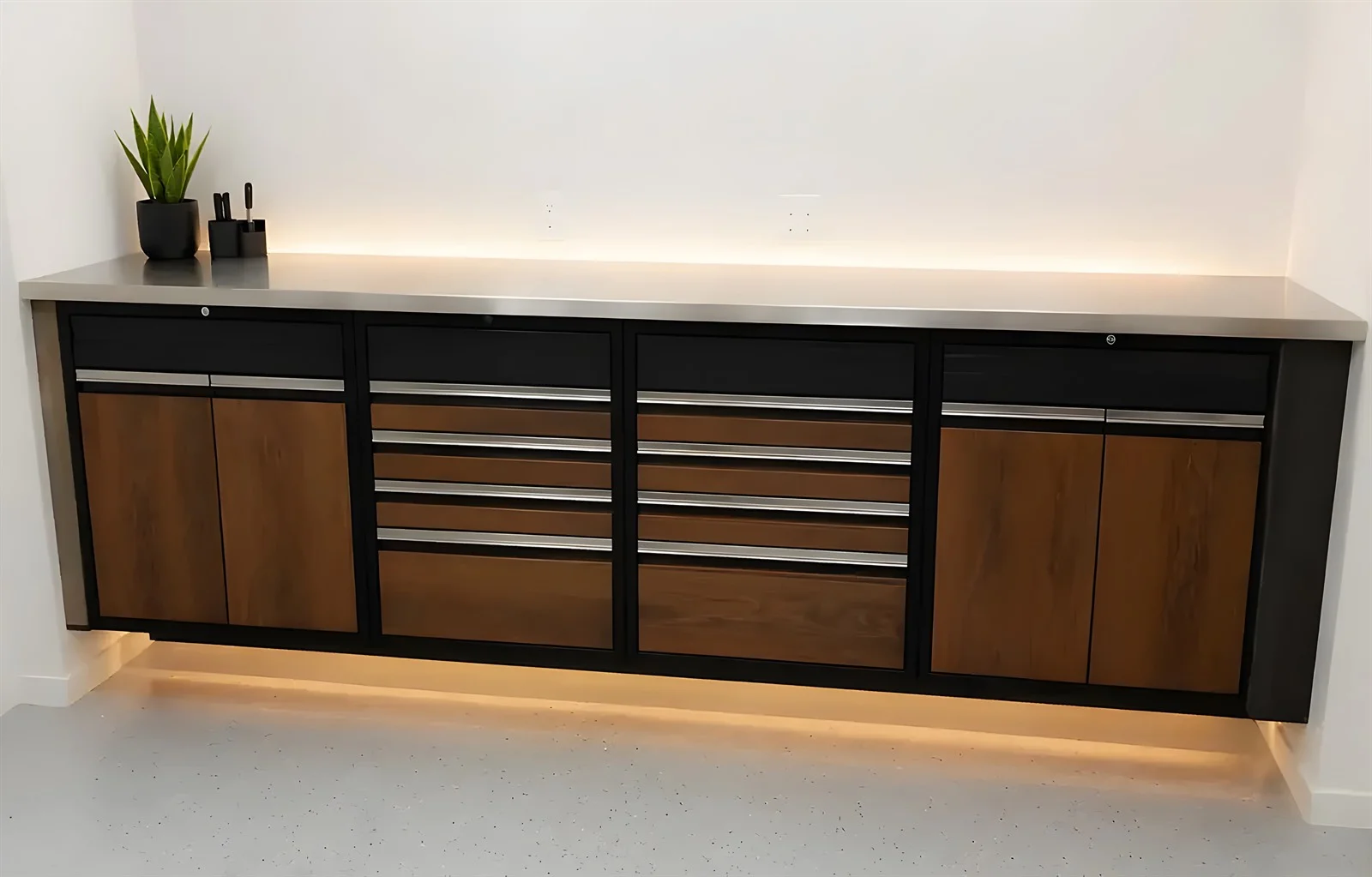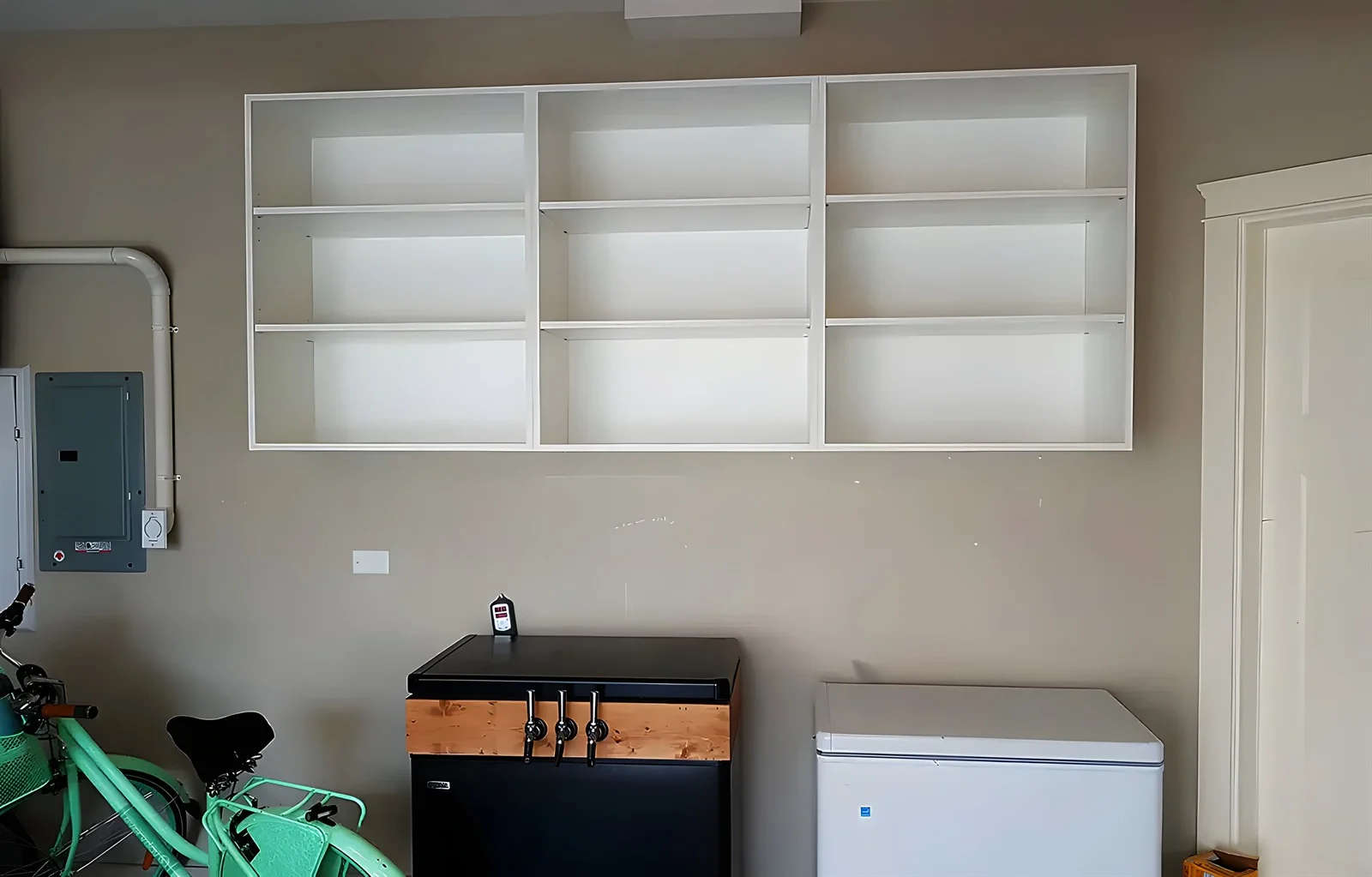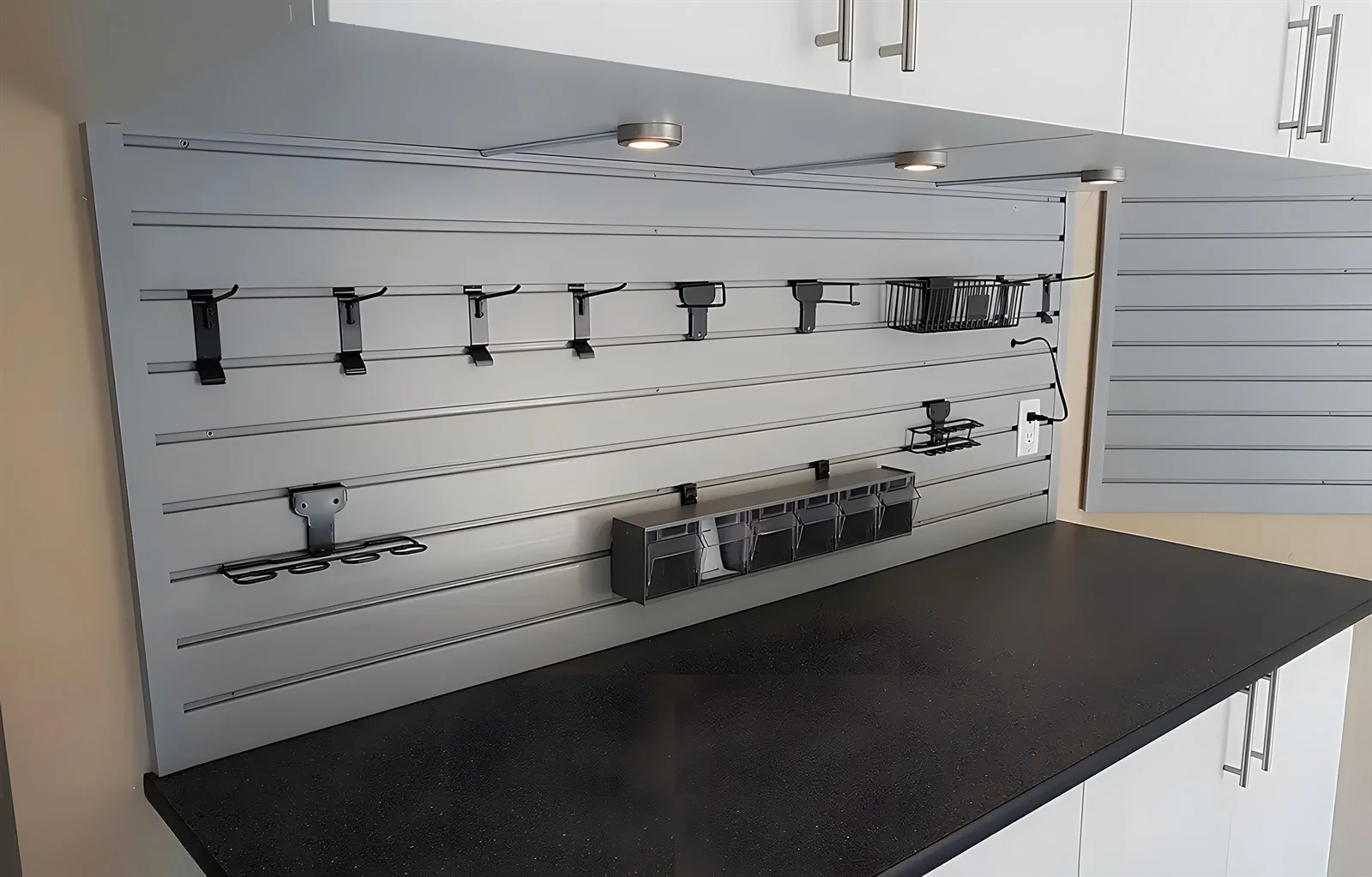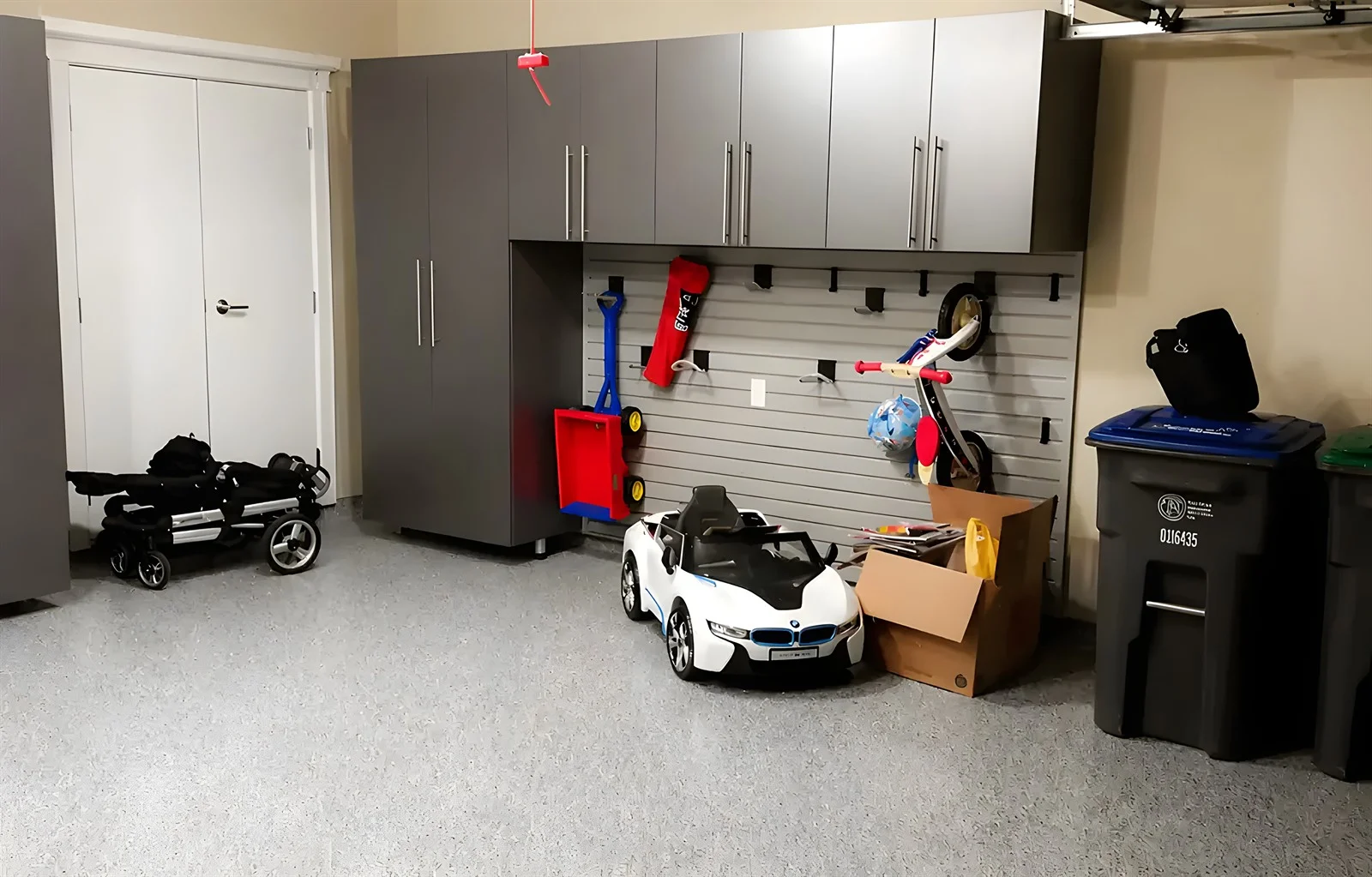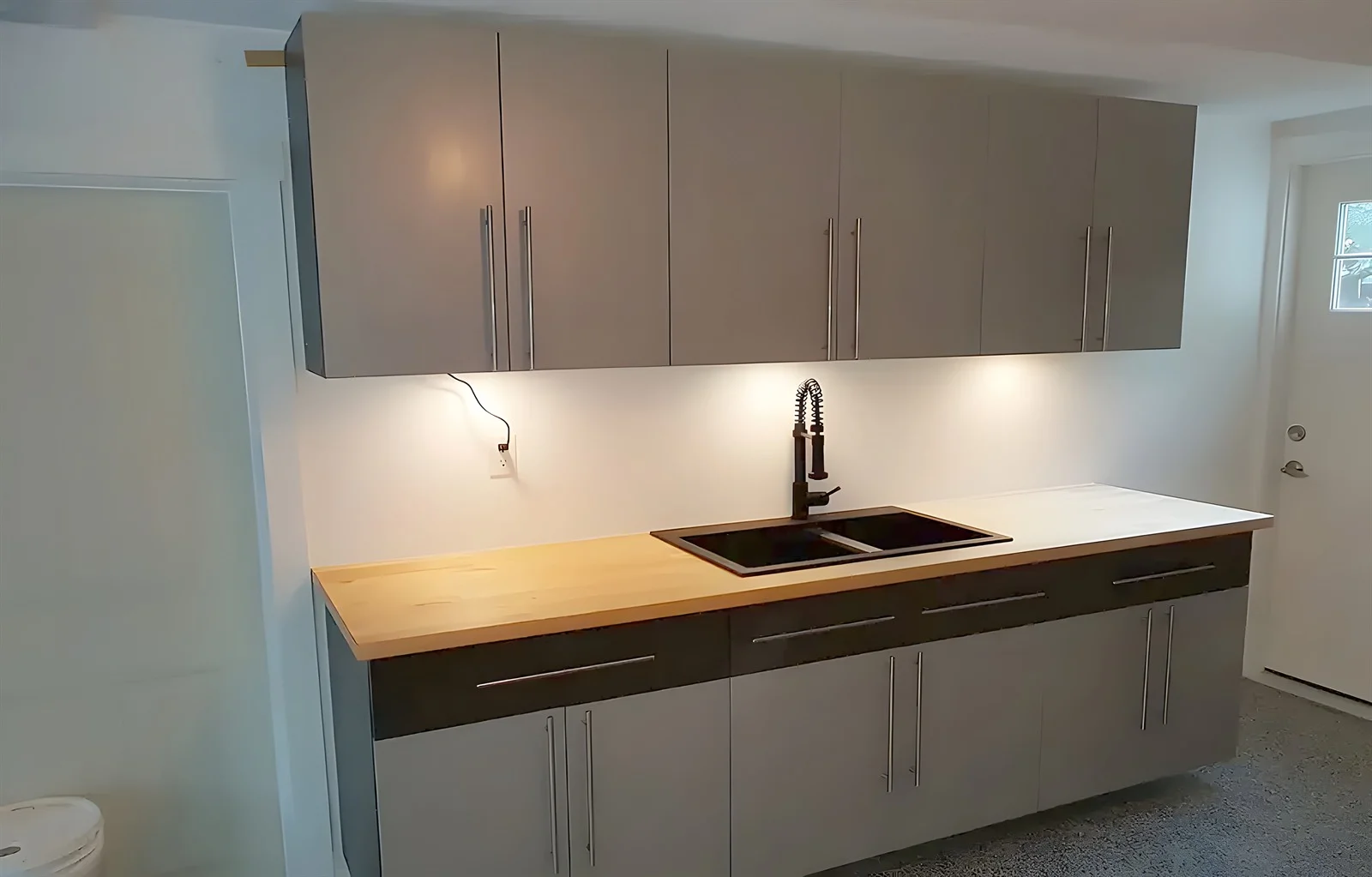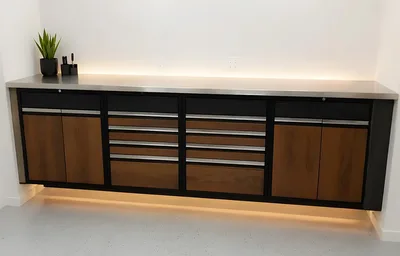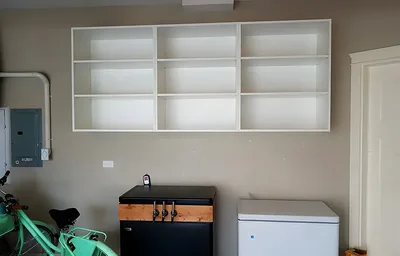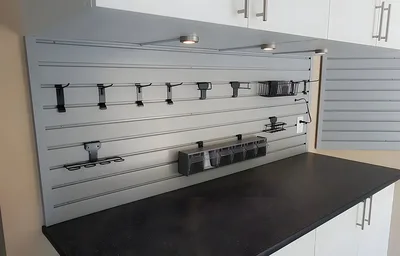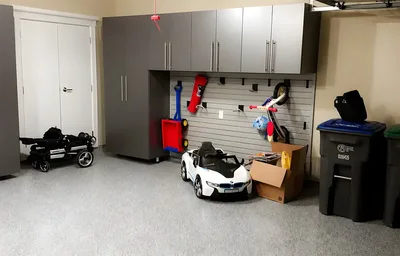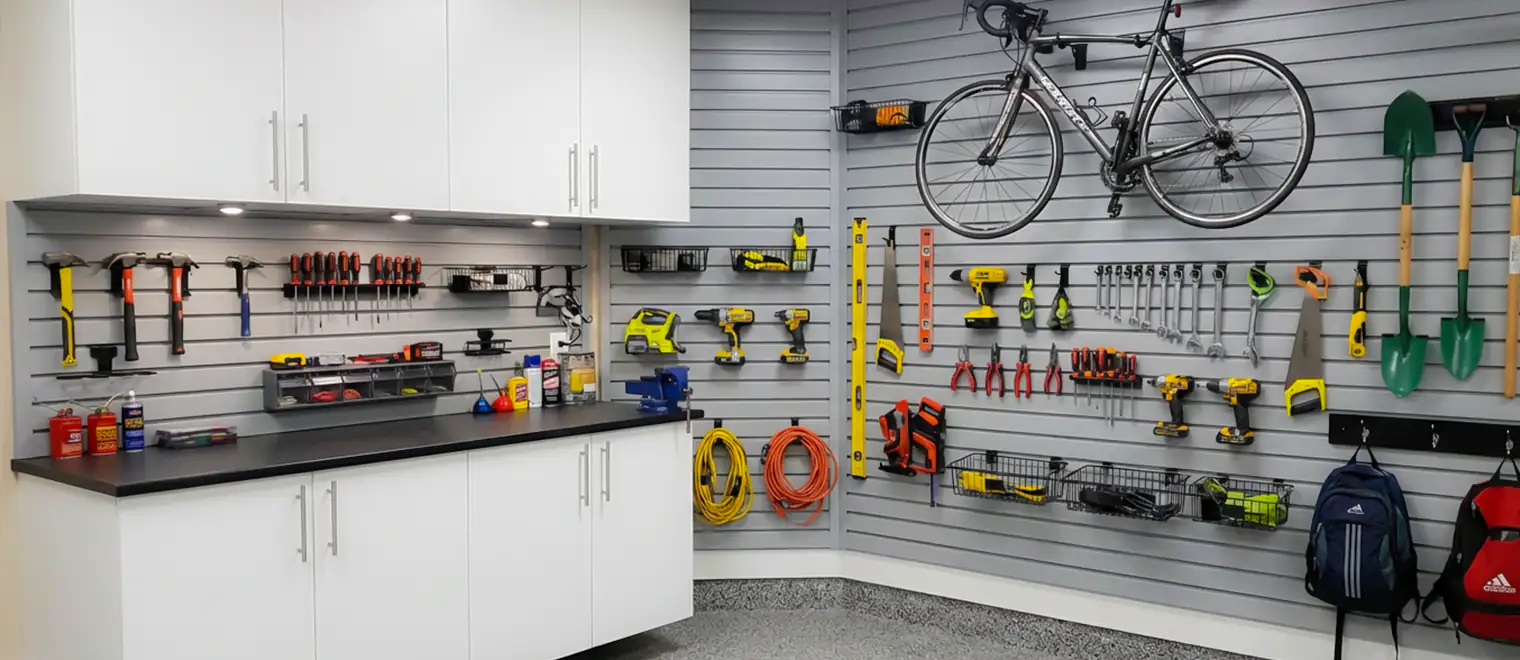
Slatwall panels, rail-and-hook systems, and floating shelving that put the walls of your Coquitlam home to work — in the garage, the mudroom, the laundry room, and anywhere else gear piles up faster than anyone puts it away.
Coquitlam households collect equipment the way the mountains behind them collect rain. Skis and snowboards come home from winter weekends, bikes roll in from Mundy Park and the Traboulay PoCo Trail, and cleats, sticks, and rackets multiply with every season the kids sign up for. None of it needs to live on the floor.
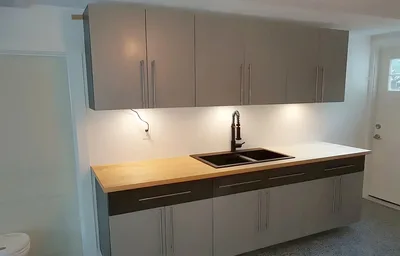
My Inspired Space designs wall systems around what your family actually owns: slatwall with movable hooks and baskets, heavy-duty rails for bikes and ladders, mounted cabinets for the things you would rather keep behind doors, and open shelves for everything else. Each panel is measured, cut, and anchored by our own installation team — no subcontractors, no guesswork.
We have spent more than fifteen years organizing homes across the Lower Mainland from our base in Pitt Meadows, a short drive down the Lougheed Highway. Call 778-910-2227 to book a free in-home consultation anywhere in Coquitlam.
Floor space is what you pay for; wall space comes free with the house. A single wall of slatwall in a tandem garage can hold what two shelving units and a stack of bins never quite managed — and still leave room to park both cars.
The wet coastal winters matter here too. Anything left on a concrete garage floor through a Coquitlam November sits in the damp: bike drivetrains rust, tent fabric mildews, cardboard boxes soften and slump. Lifting gear onto wall-mounted rails and shelving keeps air moving around it and keeps it dry until you reach for it again.
Inside the house, the same thinking applies to mudrooms and entryways. A wall of hooks, cubbies, and shallow shelves by the door catches jackets, boots, backpacks, and dog leashes before they can spread across the hallway — which, on a rainy school morning, is worth more than any closet.
Every project starts with a visit. We measure your walls, ask what you own and how often you reach for it, then sketch a layout that puts everyday items at arm height and seasonal gear up high. You see the design and the price before anything is cut.
Installation is done by our own crew, with panels and rails fastened into studs or masonry and rated for real loads. A hook carrying a loaded mountain bike, or a shelf of paint cans over your windshield, should never be a leap of faith.
You can browse the complete lineup of Wall Storage solutions we install across the Lower Mainland on our main service page.
What clients say about our garage storage work — from one of the 5-star reviews behind our 5.0 rating on Google:
"Mike has done two garage floors for me... Also built cabinets for the garage with one custom cabinet for sturgeon rods almost 10 feet tall. Top notch quality. Very happy with the product and the service." — Robert J., Google review
Between bikes for the PoCo Trail, garden tools, ladders, and sports equipment, the average Coquitlam garage wall is either empty or chaos — nails hammered in over the years holding whatever fits. Tandem garages on Burke Mountain especially live or die by their walls, since floor space is long but narrow.
Our slatwall and rail systems turn entire walls into flexible storage: hooks for bikes and ladders, baskets for balls and gloves, shelves for bins, all repositionable as your needs change. Everything visible, everything off the floor.
The same systems carry into laundry rooms, basements, and under-stair storage — anywhere a bare wall could be holding brooms, vacuums, extension cords, or the overflow from a big shopping run.
Much of Coquitlam's older housing — the 1970s and 80s split-levels of Ranch Park and Eagle Ridge, the character homes of Maillardville — was built decades before anyone imagined a family owning four bikes and two paddleboards. Entry closets are shallow, garages are single if they exist at all, and the overflow ends up in the carport or the crawl space.
Wall systems are usually the most practical fix in these homes because they add capacity without renovating: a rail-and-hook wall in the carport, slatwall in the mudroom for coats, boots, and school bags, sturdy shelving in the basement that finally gives the bulk-shopping haul a landing spot. Up on Westwood Plateau, the larger 1990s executive homes prove the other side of the rule — a three-car garage fills just as fast as a one-car when everything lives on the floor. Wherever your street falls on that spectrum, the design work is the same: measure the wall, list the gear, and give every last item a place to hang.