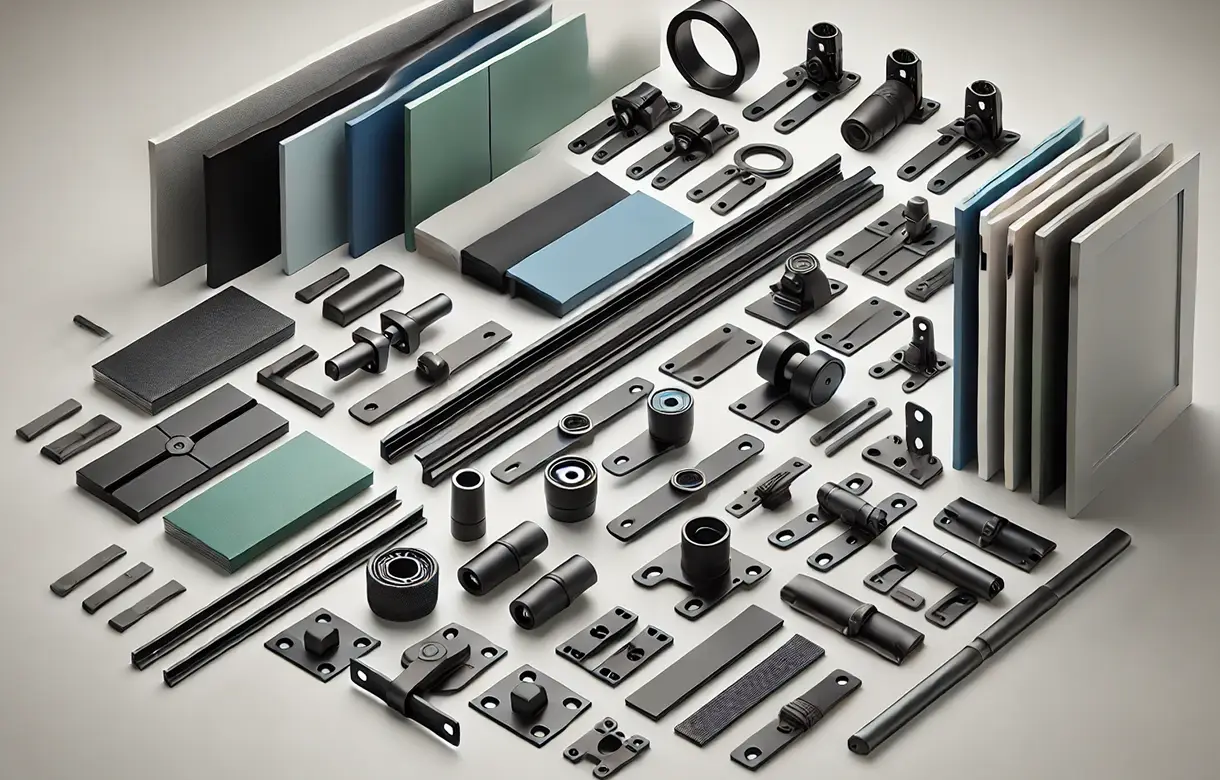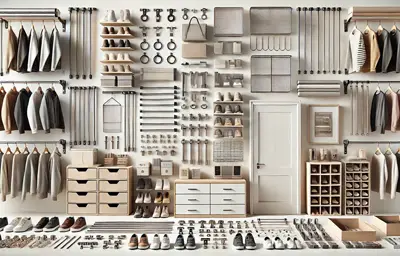
Two closets can be built from the same panel, in the same layout, at the same price, and one of them will still be a pleasure to use in ten years while the other has been irritating for eight. The difference is almost never the cabinetry. It is the moving parts, and they are the part nobody looks at in a showroom because they are behind the drawer front.
This is a genuinely asymmetric decision. The panel is a fixed object that either holds its shape or does not. The hardware is a mechanism that has to perform the same movement tens of thousands of times, under load, in a house that expands and contracts with the seasons. Everything that will ever go wrong with a closet mechanically goes wrong here.
Closet hardware and accessories in Abbotsford are worth treating as a specification rather than a finishing touch for that reason. What follows is about the moving parts and the fittings that go inside a storage system: what each one is for, what makes it fail early, and which decisions cannot be reversed once the closet is built.
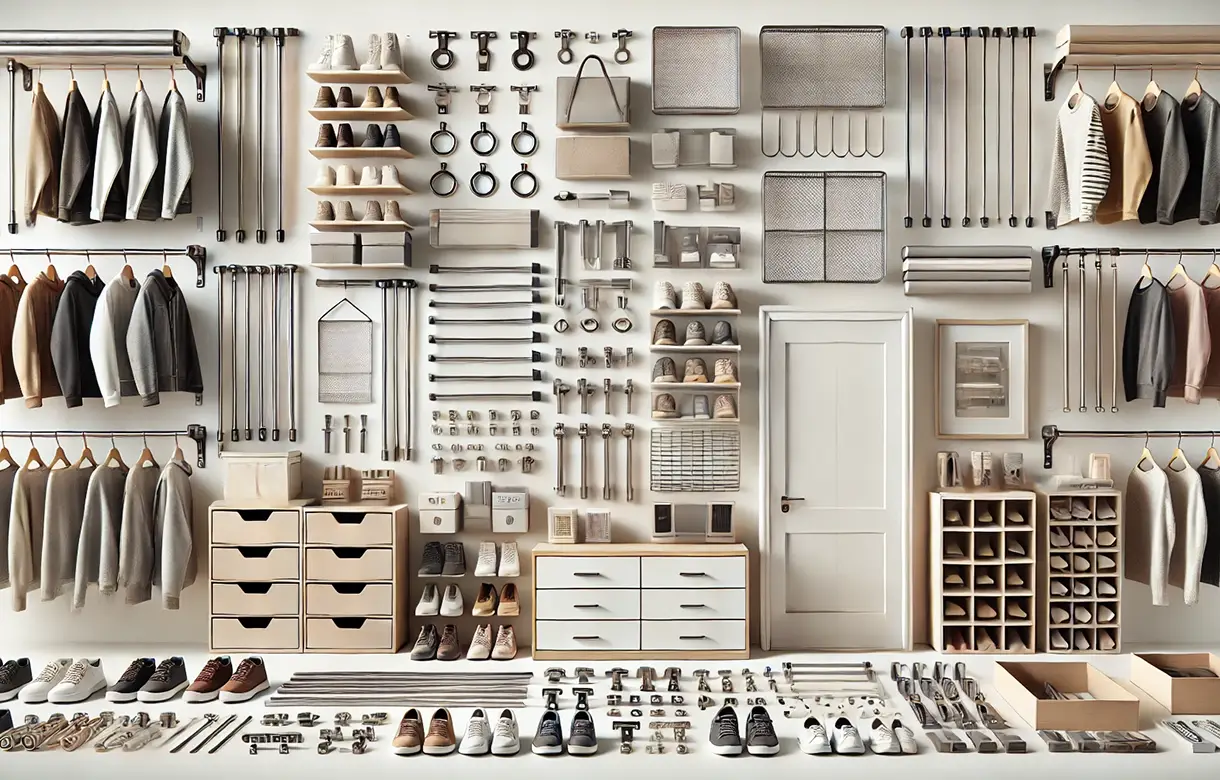
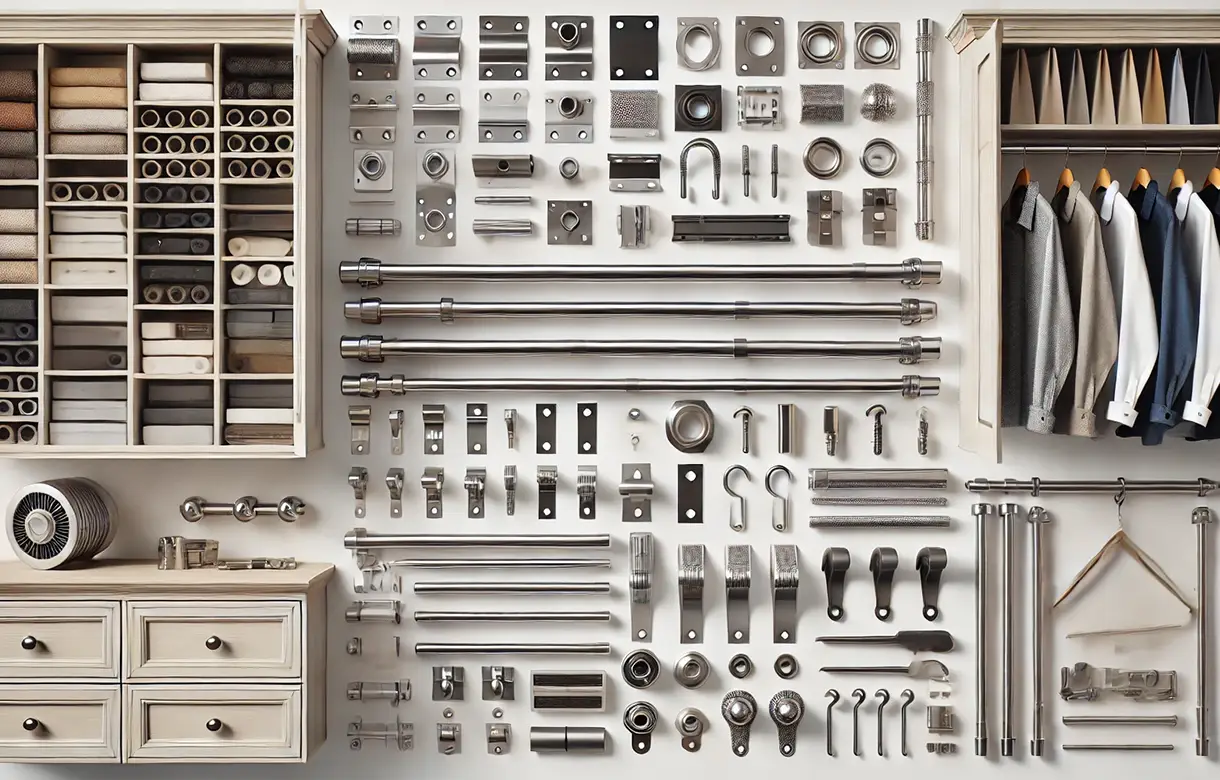
The range divides into four groups, and they behave differently enough that they are worth understanding separately rather than as a single shopping list.
The rod is the most loaded component in a closet and the one most often treated as an afterthought. It carries a continuous, static weight for its entire life, and unlike a drawer it never gets a rest.
What matters is the span and the supports rather than the tube. Closet rods Abbotsford households complain about are almost always failing at the ends or bowing in the middle of an over-long run, not breaking. A run kept within a sensible span, a centre support where it cannot be, and end fixings carried into structure rather than into drywall alone is the whole of it. A full run of winter coats is a very different load from the same length of shirts, so what the rod will actually hold is worth saying out loud at design.
Beyond the plain rod there are mechanisms: pull-down rails that bring a high hanging section within reach, and retractable valet rods that give temporary hanging space and fold away. Both are genuinely useful and both need specific clearances, which is why they are easier to include from the start than to add later.
This is where hardware quality shows fastest, because a runner is a mechanism that moves under load several times a day and its rating is consumed by use rather than by time.
Full-extension runners let the whole drawer clear the cabinet so the back is genuinely reachable. Partial-extension runners stop short and leave the rear portion effectively inaccessible, which is why they are the most common quiet cost saving in a quote and the one homeowners notice last. Soft-close is the other marker, and it does more than feel pleasant: a drawer that decelerates rather than slamming puts far less shock into its own joints and fixings over years.
Pull-out closet baskets Abbotsford closets are fitted with sit between a shelf and a drawer. They are open, so contents are visible and ventilated, and they suit folded knitwear, laundry and anything that benefits from air. What they do not do is contain small items or look tidy when the contents are not, which is the trade-off against a closed drawer of the same size.
Shelving itself is panel, but what turns a shelf into usable storage is the fittings on it. Closet shelving accessories Abbotsford homeowners get most from are the unglamorous ones: dividers that stop folded stacks collapsing sideways, shoe fences that keep pairs from being pushed off the back, and adjustable supports that let spacing follow the contents rather than the other way round.
Adjustability is worth protecting rather than trading away. What a household stores changes, and fixed shelf spacing locks in wasted air above every item shorter than the tallest one, permanently. Pins and a drilled pattern cost very little at manufacture and cannot be added afterwards to a fixed shelf.
Lighting belongs in this group more than people expect. A closet lit only by the bedroom light has half its contents in shadow and colour is genuinely hard to judge. Low-profile fittings under shelves or along a hanging section change that, and where a new supply or circuit is involved that portion is licensed electrical work with its own scope.
The specialty group is the one people enjoy choosing and the one most often over-bought. Slide-out belt and tie racks, felt-lined jewelry inserts, hooks, drawer inserts and dedicated accessory fittings all solve real problems, but each of them occupies volume that would otherwise hold something else.
The useful discipline is to add them against a problem you actually have rather than against a problem the showroom demonstrates. Closet organizer accessories Abbotsford households keep using five years later are almost always the ones bought to fix a specific daily irritation. The ones that end up empty were bought because they looked clever.
Wardrobe accessories Abbotsford homes take also have to clear each other. A pull-out that fouls a door, a rack that cannot extend fully because a drawer tower is too close, or an insert that stops a drawer closing are all clearance problems rather than product problems, and they are settled on a drawing rather than discovered on installation day.
Start from the irritations rather than the catalogue. What do you have to move to reach something else, what falls over, what gets lost, what is in shadow, and what do you avoid using because it is awkward. Each of those maps onto a fitting, and the list is usually shorter and cheaper than expected.
Then check the two constraints that decide whether a fitting is possible: the clear width of the section it goes into, and the clearance it needs to operate. Most accessories that cannot be fitted fail on one of those rather than on cost. Where the underlying layout is the problem rather than the fittings, that is a different conversation and the closet pages cover it.
Cabinetry fails slowly and visibly. Hardware fails suddenly and invisibly, and it is what people actually experience as the closet getting worse. A drawer that has started to drag, a hinge that lets a door sit proud, a rod that has developed a bow — none of those is a structural problem and all of them make the closet feel cheap.
The reason is that mechanisms are rated by movement rather than by years. A runner does not wear out in a period of time; it wears out over a number of openings, and how quickly a household reaches that number depends entirely on how many people are using the closet and how often. Two identical drawers can be at very different points in their working life after the same five years.
This is also why hardware is the easiest place to quietly reduce a quote. The visible difference between a partial-extension runner and a full-extension soft-close one is nothing at all until the drawer is opened, and by then the decision is built in. Closet hardware Abbotsford quotes should be compared on grade and extension type rather than on the count of drawers, because that is where two apparently identical quotes actually diverge.
The third point is recoverability. Good hardware is adjustable by design, which means a door that has drifted out of line as the house moved is a five-minute correction rather than a fault. Hardware without that adjustment range gives you no way back.
Begin by writing down the actual irritations rather than browsing options. This inverts the usual process and it produces a much shorter list, because most catalogue accessories solve problems a given household does not have.
Then rank by frequency. A fitting that improves something done every morning is worth several that improve something done monthly, and the budget should follow that rather than being spread evenly. Custom closet accessories Abbotsford homeowners regret are usually the ones that were included because there was room in the drawing.
Third, check the physical constraints before falling in love with anything. Section width, the clearance the mechanism needs to operate, panel thickness where something mounts to a gable, and whether the fitting will collide with a door or a neighbouring pull-out at full extension. These are the reasons accessories cannot be fitted, and all four are knowable at design.
Fourth, separate what must be decided now from what can wait. Anything requiring a drilled pattern, a specific internal clearance or a supply is effectively a now decision. Anything that simply sits on a shelf or hangs from a rail can be added against real use later, which is the cheaper way to buy the specialty group.
Finally, be honest about who else uses the closet. A fitting that requires a particular habit works for one careful person and fails in a household where three people share the space, and that is a specification question rather than a character one.
Buying the specialty group first is the commonest. Tie racks and jewelry inserts are enjoyable to choose and marginal in effect, while the runner grade and the rod support are dull and decide how the closet feels for a decade.
The second is fittings that cannot fully extend. A pull-out installed where something else is in its path delivers a fraction of its function, and the homeowner usually assumes the product is disappointing rather than that the clearance is wrong.
The third is overloading. Every drawer and every rod has a class of duty it was selected for, and the most frequent cause of an early failure is a component being asked to do a heavier job than the one it was specified for. This is a conversation at design rather than a complaint afterwards, and it depends on saying what will actually go in.
The fourth is treating adjustment as a fault. Hinges and runners in daily use are meant to be trued up occasionally as the house moves through the seasons. A door that has drifted slightly is normal; leaving it uncorrected for a year is what turns a five-minute adjustment into wear.
The fifth is fixed shelving. It is a saving of a few dollars that permanently removes the ability to adapt, and it is the single change most often regretted once the contents of a closet change.
A designer comes to the house and works from the problems rather than a product list: what sticks, what sags, what is in shadow, what is hard to reach. Measurements are taken of the sections, the clearances and the panel the fittings would mount into, and what each drawer and rod will actually carry is discussed rather than assumed.
The fittings are specified against those loads and clearances and shown in a 3D rendering of your closet, with pull-outs drawn at full extension. Seeing a mechanism extended in the drawing is what catches collisions before they are built, which is the failure mode that produces most accessory disappointment.
Components are ordered against the specification and the work is scheduled once availability is confirmed. Where accessories form part of a larger closet project they arrive with it; where they are a standalone fitting the visit is shorter and self-contained.
Fittings are installed, then adjusted, and the second half matters as much as the first. Doors are aligned, runners set so drawers close squarely, and mechanisms checked at full travel. The adjustment range is also demonstrated, because most of what a closet needs over the following years is a small correction the household can make themselves.
Selection starts from load and movement rather than from appearance. What a drawer will carry determines the runner class; what a rod will hold determines its span and whether it needs a centre support; how often something is used determines whether the duty class is adequate for that household rather than for an average one.
Mounting is the second half, and it is where most retrofits succeed or fail. Panel thickness has to suit the fixing, gables have to be sound where something mounts to them, and anything carrying real load has to reach structure rather than relying on a panel face. In an existing closet these are checked before anything is selected, because a fitting specified for a panel it cannot mount to is wasted.
Clearance is the third. Every mechanism needs room to operate at full travel, and the common errors are a pull-out that meets a door, two pull-outs that meet each other, or an insert that stops a drawer closing. These are resolved on the drawing with everything shown extended rather than closed.
Adjustment is designed in rather than added. Quality hinges and runners carry adjustment in more than one axis precisely because buildings move, and the range is what allows a closet to be trued up over its life instead of being lived with. A closet hardware supplier Abbotsford households deal with should be asking what the drawer will carry before recommending anything, because that single question drives most of the specification.
The Abbotsford factor in a hardware specification is not the climate or the housing stock. It is how many people are using the closet, and it changes the answer more than most homeowners expect.
Census figures put the average Abbotsford household at around 2.8 people, with roughly three in ten containing four or more. That is a fuller house than the regional pattern, and the consequence for hardware is arithmetic rather than opinion. A mechanism is rated by movements, not by years, so a drawer opened four times a day in a shared closet reaches the same point in its working life in a quarter of the time as the same drawer opened once. Two households can buy identical closets and be in genuinely different condition after five years without either having done anything wrong.
The practical consequences are specific. Duty class should be selected against the household rather than against an average, which usually means specifying a grade up on the components in shared sections and not bothering elsewhere. Adjustment intervals come round sooner, so the adjustment range matters more and the household is better off knowing how to use it than waiting for a service call. And soft-close stops being a comfort feature, because a drawer that is slammed several times a day by different people is absorbing shock into its own fixings every time.
Accessory selection shifts too, in a way that is easy to miss. A fitting that depends on being used correctly — an insert that only works if things are returned in a particular orientation, a rack that has to be closed fully — works well for one person and degrades quickly across several. Shared closets do better with fittings that are tolerant of being used carelessly, which tends to mean open baskets over fine compartments and simple mechanisms over clever ones.
None of this is exotic and none of it costs much at specification stage. It is simply a different set of answers from the ones that suit a two-person household, and it is worth saying how many people share the closet at the first visit. We have been working across the Lower Mainland for more than fifteen years, and the closets out here are opened more times a day than the ones closer in.