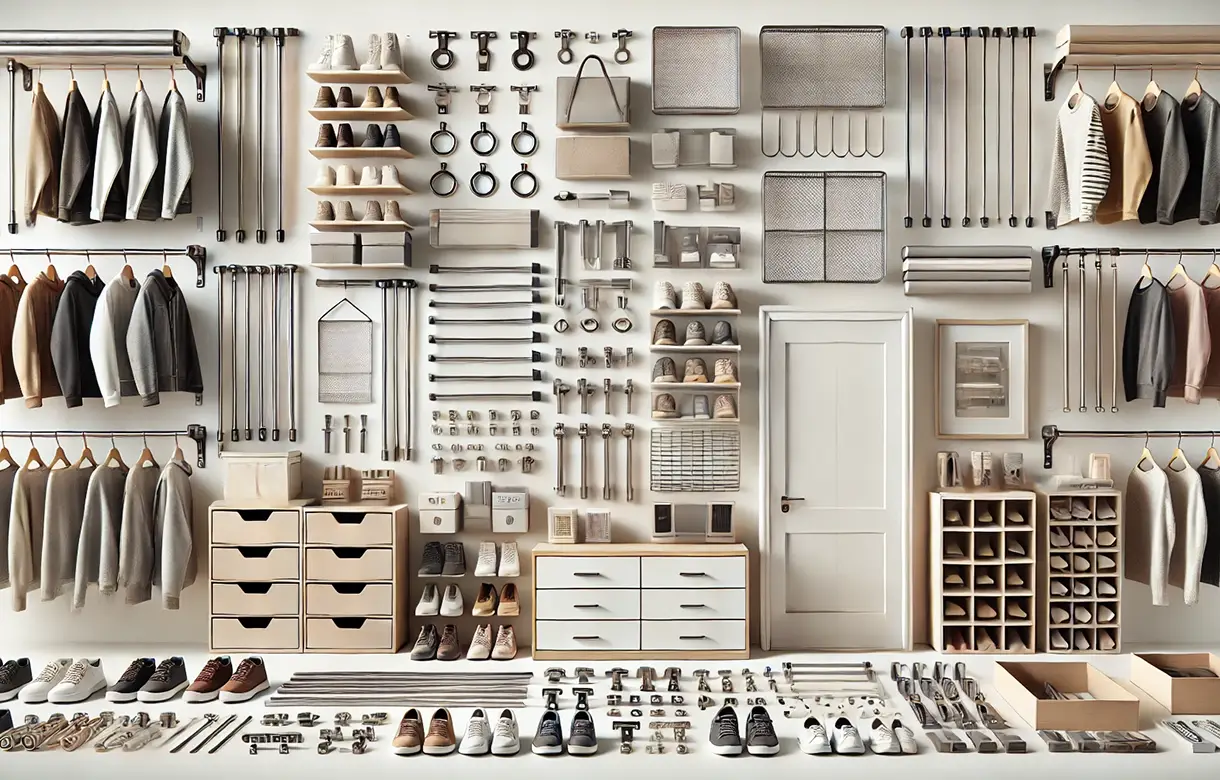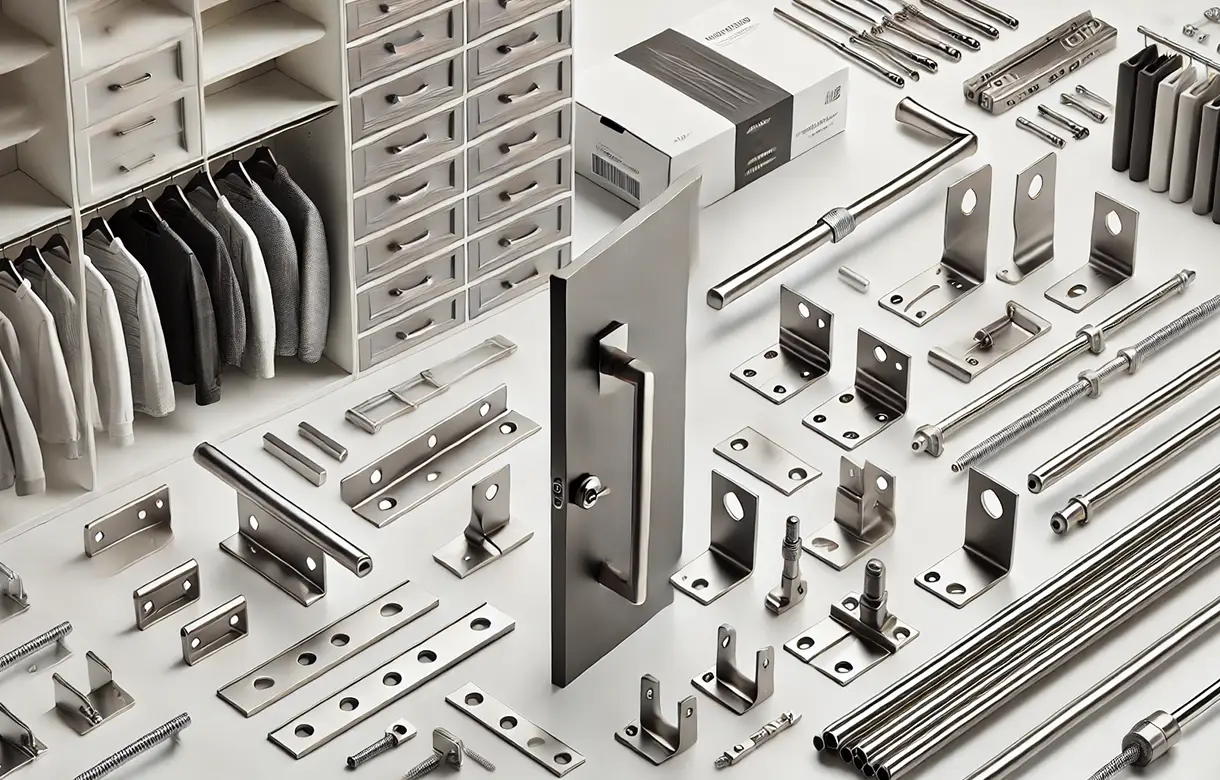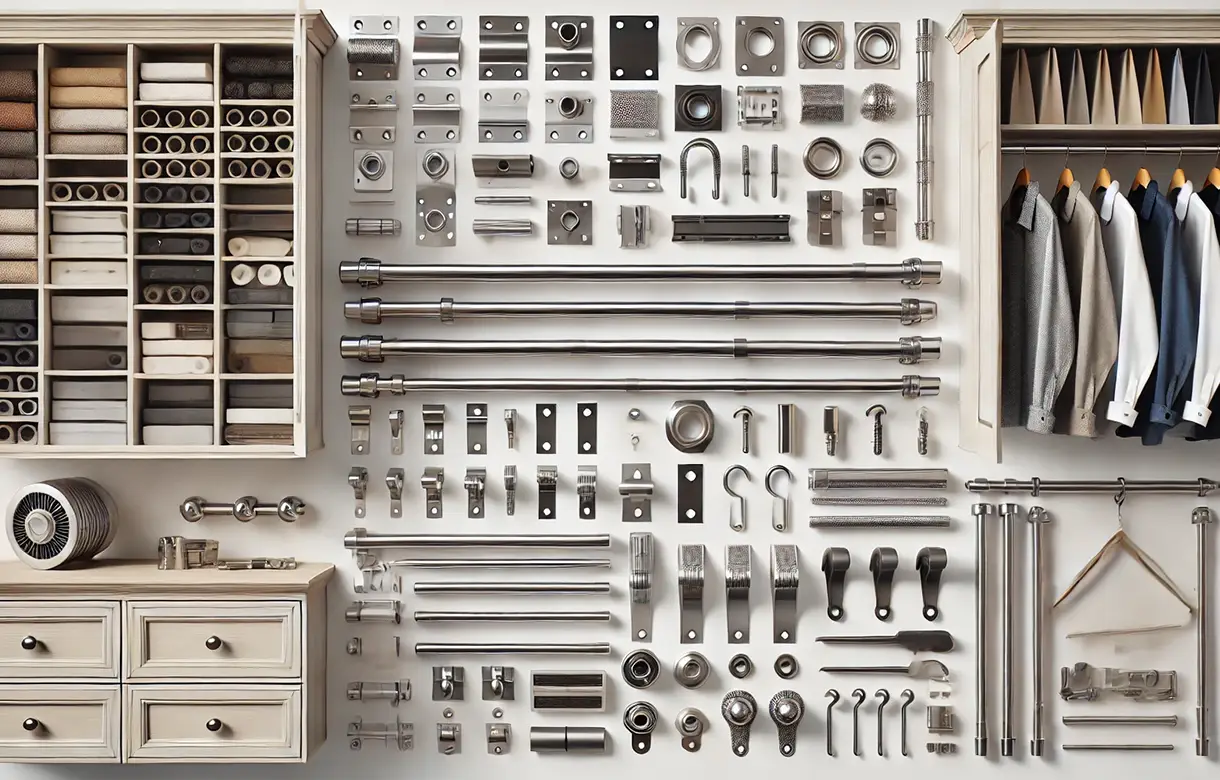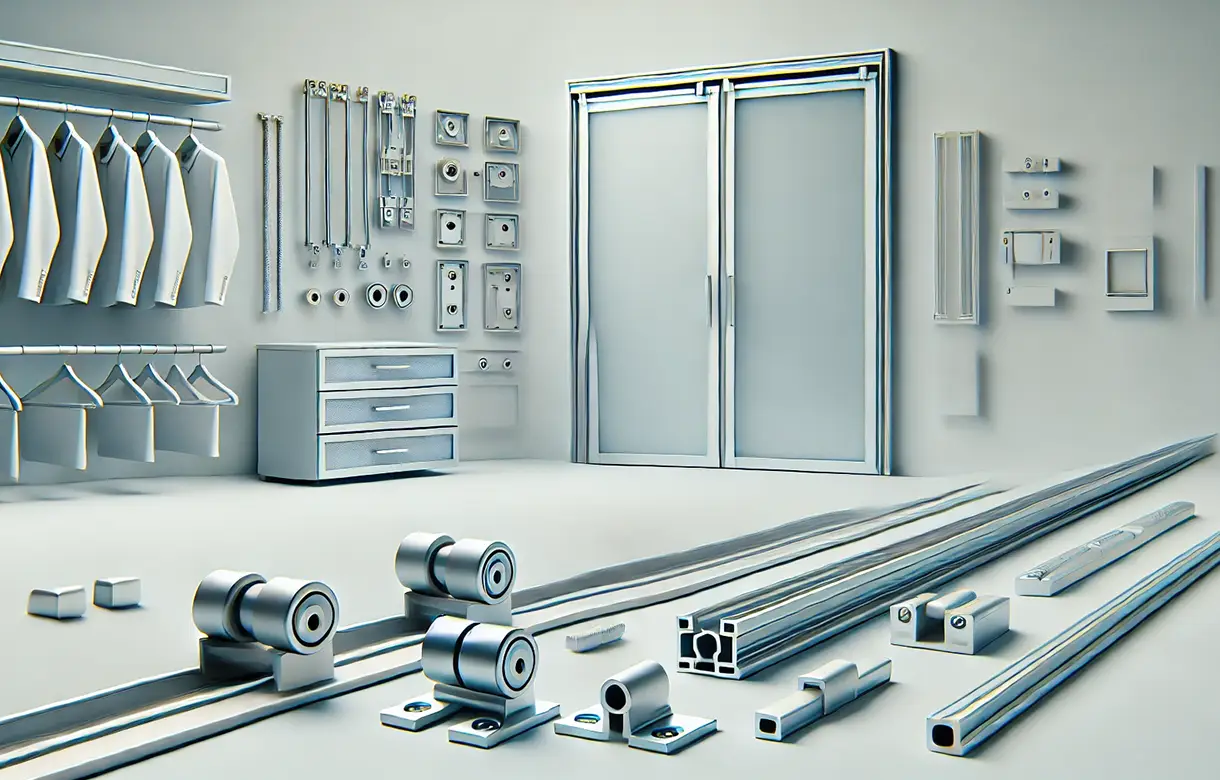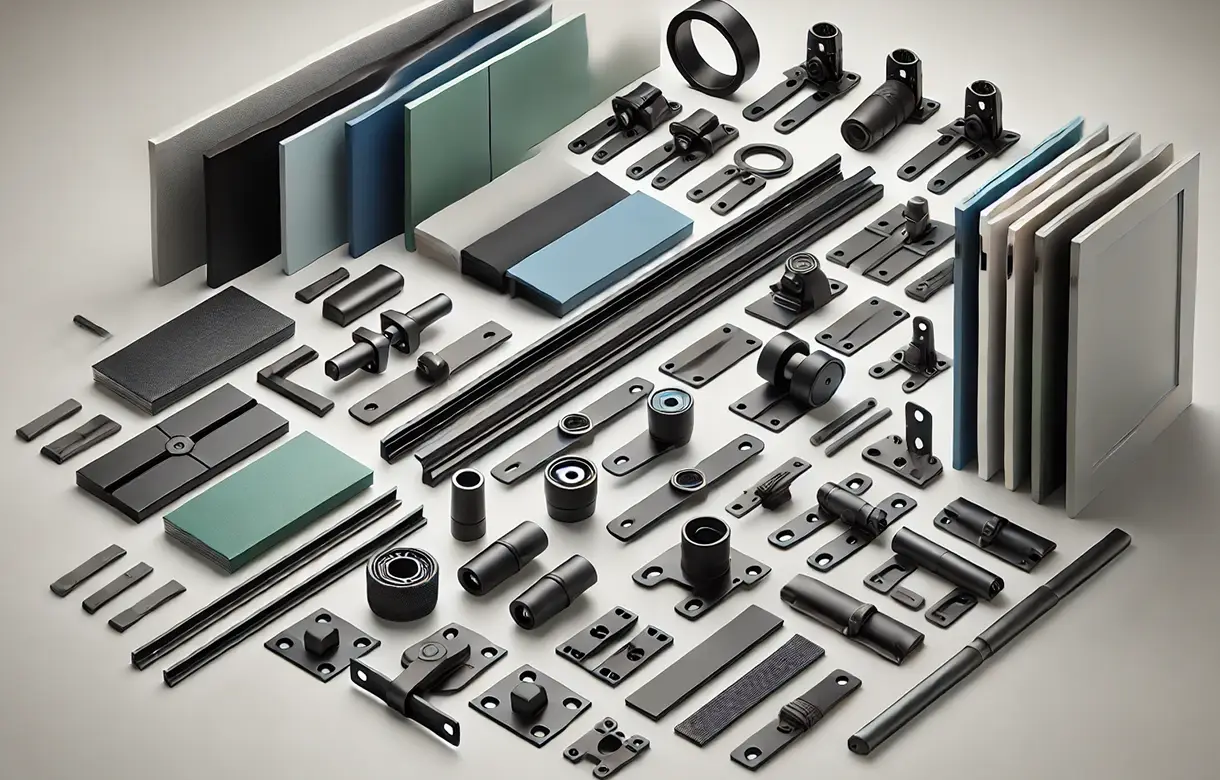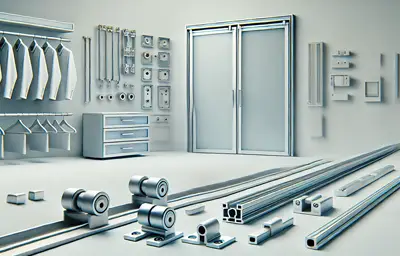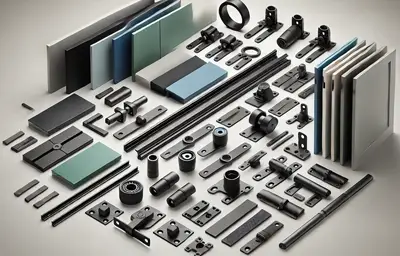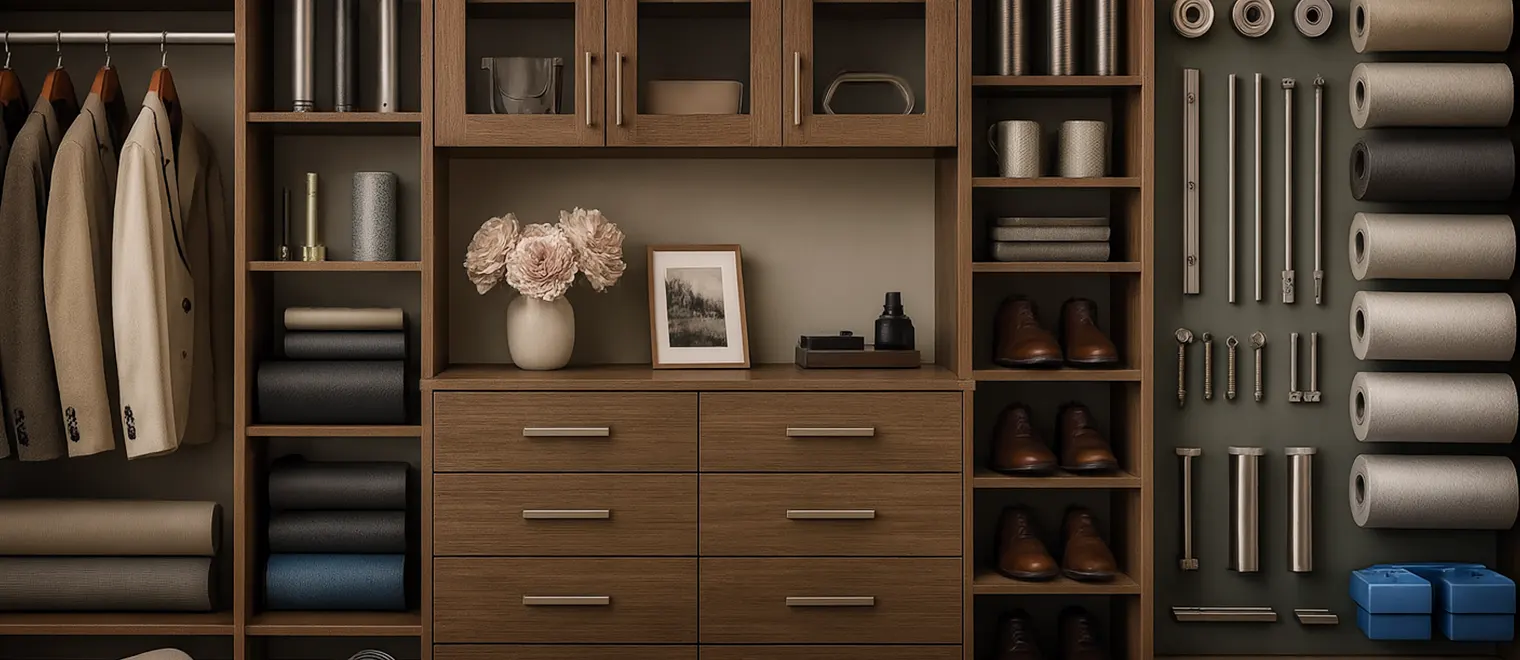
Built storage is only as good as the hardware running inside it. My Inspired Space upgrades and retrofits storage hardware across Coquitlam — soft-close hinges and slides, full-extension drawer runners, pull-down closet rods, valet rods, hooks and pulls, integrated LED lighting, and belt, tie and jewelry organizers. We fit these components on every system we build, and we install them into systems other people built too.
Here is a pattern we see constantly in Coquitlam: the cabinetry is fine, the layout is workable, and yet the whole thing feels tired. Drawers grind on worn runners and only open three-quarters of the way. Doors slam or hang crooked on stretched hinges. The top rod in the walk-in is out of reach for half the household, and the inside of every cabinet is a dark hole after four in the afternoon from October to March.
None of that is a cabinetry problem. It is a hardware problem, and hardware can be swapped. A set of full-extension, soft-close runners changes how a drawer behaves more than any amount of reorganizing its contents; a pull-down rod brings the upper half of a tall closet back into daily use; an LED strip wired to a door switch means you actually see what you own. These are small interventions with an outsized effect, and they cost a fraction of new millwork.
We will also tell you when hardware is not the answer. If a carcass is swollen, delaminating or structurally past it, bolting good components onto it wastes money, and the honest move is a conversation about a custom closet or new cabinets instead. Distinguishing between the two situations is exactly what the free consultation is for.
Every component we install falls into one of six families, and each one solves a specific, recognisable irritation.
The upgrade people notice first. A soft-close hinge catches the door in the last few degrees of travel and eases it shut; a soft-close slide does the same for a drawer. Beyond the silence, the mechanism protects the cabinet — slamming is what works fasteners loose and chips edges over years of use. Most modern concealed hinges sit in a standard 35 mm cup bore, which is why soft-close versions can usually be swapped into existing cabinet doors without new drilling.
A builder-grade drawer on three-quarter-extension runners hides the back quarter of its own volume, permanently. Full-extension runners bring the entire drawer out past the cabinet face, so the back of the drawer is as usable as the front. Load rating matters here: a shallow top drawer and a deep pot drawer or file drawer need very different runners, and fitting the heavy-duty version where the load demands it is the difference between a ten-year upgrade and a two-year one.
A pull-down rod is a spring-assisted mechanism that lets you hook a high hanging rail and swing it down to chest height, then return it. It turns the top metre of a tall closet from seasonal dead storage into everyday hanging. A valet rod is its short cousin — a retractable peg that extends to hold an outfit, a garment bag or tomorrow's clothes, then disappears flush when released.
Closets and cabinets are dark boxes, and the Lower Mainland gives us dark mornings for a good part of the year. Low-profile LED strips under shelves, inside wardrobes or along hanging rails, triggered by a door contact or a motion sensor, make the contents visible without anyone hunting for a switch. Done properly the wiring is concealed, the colour temperature is chosen so clothing reads true, and the driver is somewhere serviceable rather than buried.
Handles and pulls are the jewellery of a storage system, and swapping dated ones is the cheapest visual refresh there is. Hooks are the workhorses — robe hooks, bag hooks, hooks inside wardrobe gables — and the difference between a decorative hook and a rated one shows up the first time somebody hangs a loaded backpack on it.
Purpose-built pull-outs for the things that defeat ordinary shelving. A sliding belt rack holds each belt separately and visibly; a tie rack does the same for ties; a felt-lined jewelry drawer insert keeps chains from tangling and pairs together. These mount inside existing wardrobe sections and are one of the most requested retrofits we do.
Builders and production cabinet shops price hardware by the unit across an entire development, so the hinges and slides that come with most homes are the minimum that closes a door on handover day. They were never specified for twenty years of daily use, and they show it on schedule: play develops in the hinge arms, rollers flatten, nylon wheels crack, and the drawer that once ran straight starts to rack and bind.
The encouraging part is that wear concentrates in exactly the parts designed to be replaceable. A cabinet with sound panels and tired mechanisms is a strong candidate for a hardware refresh rather than replacement — same boxes, same doors and drawer fronts, new motion. The result feels disproportionate to the invoice, because everything you touch is new even though nothing you see has changed.
Weight is the other quiet killer. Drawers get loaded with whatever fits, not whatever the runner was rated for, and a 25 kg-class runner under a drawer of cast iron or paper will complain within a couple of years. Part of specifying replacement hardware is asking what actually lives in each drawer and choosing the rating to suit — a question the original installer never got to ask.
And there is a compounding effect worth knowing about: failing hardware damages the cabinet it lives in. A binding drawer gets forced, which strains the joints; a sagging door wears an arc into the face frame; a collapsed runner lets the drawer box grind on the cabinet member below it. Replacing a worn mechanism early is cheap insurance for the millwork around it.
Modern cabinet hardware is more standardised than most homeowners expect, which is what makes retrofits practical. Concealed hinges share common cup sizes and mounting patterns; drawer runners come in standard lengths and clearance requirements; LED systems are low-voltage and can be added to nearly any carcass with a discreet wiring path. The questions that decide a retrofit are specific ones: how much side clearance the drawer boxes have, what the doors are made of and how thick they are, whether the drawer boxes are worth keeping or should be replaced along with the runners.
Undermount soft-close runners are the one to plan carefully. They are the nicest mechanism available — invisible, silent, fully extending — but they demand particular drawer box dimensions and bottom recesses, so putting them into an older cabinet sometimes means new drawer boxes behind the existing fronts. That is still far cheaper than new cabinets, and the existing kitchen or closet keeps its look while gaining modern motion. Where the boxes cannot justify it, quality side-mount soft-close runners deliver most of the benefit with none of the surgery.
Wardrobe accessories are generally the easiest retrofit of all. Pull-down rods, valet rods, belt and tie pull-outs and jewelry inserts mount to panels and gables that are almost always sound, whatever the age of the system. The main checks are panel thickness, section width and what the mechanism needs to clear as it moves.
We also service systems we installed ourselves, sometimes many years on. Households change, and adding lighting, another rod or a set of organizers to an existing My Inspired Space build is quick because the specifications are on file.
Photos of the cabinet or closet plus a description of what annoys you daily gets things moving. We will say up front whether new hardware will fix it or whether the underlying system is the issue.
We measure clearances, check panel and door condition, weigh what each drawer actually carries, and specify components by duty rather than by catalogue page. You get a clear list of what we recommend and why.
Hinges and runners are swapped, mechanisms are mounted into structure, lighting is wired and concealed, and everything is adjusted so doors sit flush and drawers run true. Most upgrades finish in a day.
Good hardware is adjustable by design. We set it up, show you the adjustments, and if you want to add more later — lighting this year, organizers next — each addition builds on the last.
The new Burke Mountain builds come with generous closets and minimal mechanisms. Developers deliver the square footage; the hardware budget rarely follows. Tall walk-ins with hanging space above head height are standard up there, which makes pull-down rods the single most useful addition, and the deep, windowless closet layouts make integrated LED lighting close behind. These are young systems in good condition — perfect candidates for adding capability rather than repairing wear.
Westwood Plateau and the surrounding late-80s and 90s two-storeys are the opposite case: well-built cabinetry now running on original hardware that has reached the end of its mechanical life. This is the classic refresh territory — soft-close hinges swapped into existing doors, worn roller slides replaced with full-extension soft-close runners, and new pulls to finish. The kitchens and wardrobes in these homes usually have another few decades in the boxes themselves.
Down the slope in Austin Heights, Como Lake and Maillardville, the older and often smaller homes reward a different toolkit. Compact closets gain the most from organizers that use vertical inches — belt and tie pull-outs, hook arrays on gables and doors, valet rods for the morning routine — and from lighting, because small deep closets are the darkest of all. Many of these houses also have basement suites, where a few rated hooks and a properly lit closet transform storage that has never had a dollar spent on it.
Alongside Coquitlam we cover Port Coquitlam and Port Moody, plus Pitt Meadows, Maple Ridge, Langley, Burnaby, New Westminster and Vancouver.