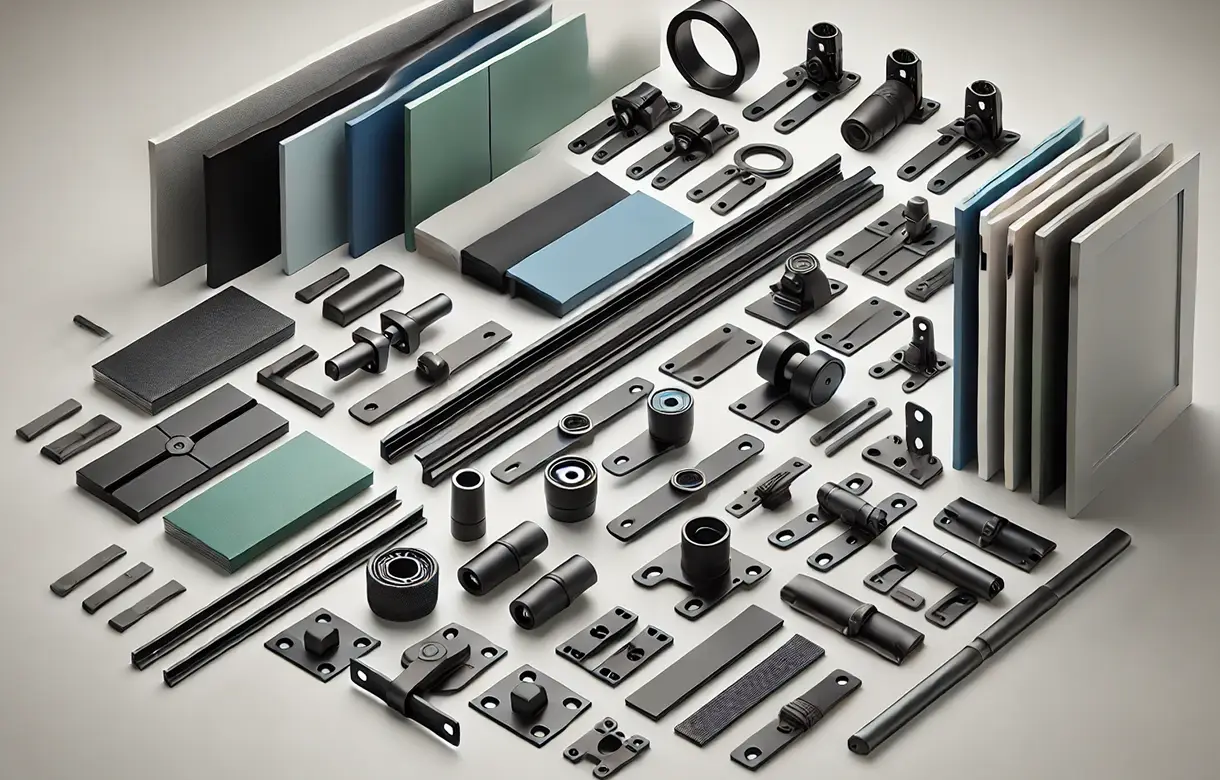
This one is our home turf: My Inspired Space works out of Joyner Place, right here in Pitt Meadows. We supply and install the mechanisms that make built storage earn its space — soft-close hinges and slides, full-extension drawer runners, pull-down and valet rods, hooks and pulls, integrated LED lighting, and belt, tie and jewelry organizers — on our own builds and as retrofits into storage anyone else built.
Pitt Meadows homes are, on the whole, not large. The townhomes around Osprey Village and South Bonson and the compact lots through the older core near Harris Road share a constraint: there is no spare room to throw at a storage problem. When you cannot add square footage, the only lever left is making the existing cubic footage work harder — and that lever is hardware.
Consider what a compact closet loses to bad mechanisms. A drawer on part-extension runners surrenders its back third. A single low rod strands the metre of air above it. An unlit interior hides whatever sits past the first row. Add those up across every closet and cabinet in a townhome and the waste amounts to a room's worth of storage — recoverable, piece by piece, with runners, rods, organizers and light.
Being local shapes how we do this work. Assessments are easy to schedule because nobody is driving across the region; parts come from the workshop minutes away; and a fair amount of our Pitt Meadows work is adding capability to systems we ourselves installed for the same families years earlier. When a job outgrows hardware — when the real answer is a rebuilt interior or a Murphy bed that returns a whole room — we say so at the walkthrough, not after the invoice.
The cheapest space in the house to reclaim is the back of every drawer. Swapping part-extension slides for full-extension soft-close runners exposes the entire drawer box, and in a townhome kitchen that single change can effectively add a cabinet's worth of reachable storage without moving a wall.
Compact floor plans often carry generous ceiling heights, and closets inherit tall upper sections that nobody can use. A counterweighted pull-down rod converts that high dead zone into functioning daily hanging — reach up, pull the handle, and the rail meets you at chest height. It is the densest storage gain available in a small closet.
Small homes cannot afford blank interior surfaces. Rated hooks on wardrobe gables, slim racks and hooks on the backs of doors, and a fold-flat valet rod turn planes that held nothing into planes that hold the daily rotation — bags, robes, tomorrow's outfit, the ironing that never quite gets done.
Belts, ties and jewelry are small-space troublemakers: they consume drawer volume out of all proportion to their size when stored flat. Slide-out belt and tie racks and divided jewelry inserts store the same items in a fraction of the space, visibly and untangled, which frees the drawers they used to occupy.
A dark closet gets used to half its depth, because things you cannot see might as well not exist. Door-switched LED strips make the full depth usable again, and in the deep, windowless closets typical of townhome construction the difference is immediate. Low-voltage, concealed wiring, no drama.
Townhome living adds an acoustic argument: cabinet slams travel through party walls and floors. Soft-close hinges and damped runners take the percussion out of kitchens and closets entirely — a courtesy your household and your neighbours both notice.
Mechanisms rarely die without warning. They telegraph, and catching the signs early keeps a cheap fix cheap.
A drawer that needs a wiggle to open has runners that are racking — the wheels or bearings on one side are wearing faster than the other. It will get worse on a schedule, and forcing it is what breaks drawer boxes.
A door that no longer lines up with its neighbours has hinges either drifting out of adjustment or ovalling their screw holes. The first is a five-minute tune; the second means the hinge is moving in the panel, and it wants attention before the screws chew the hole beyond an easy repair.
A rod with a visible smile in the middle is loaded past its span. It has not failed yet, but the sag is telling you the load and the support spacing disagree, and either an intermediate support or a stiffer rod settles the argument before gravity does.
Corners of drawers that catch, doors that whisper against their frames, a pull that turns in your hand, a shelf whose pins have crushed their holes — each is a small thing, and each is the early, inexpensive version of a later, more annoying repair. A hardware walkthrough takes us under an hour in a typical Pitt Meadows townhome and produces a short, prioritised list of what is worth touching and, just as usefully, what is fine and should be left alone.
The case for upgrading is easy to make in this city. Most Pitt Meadows storage is structurally young — Osprey Village and South Bonson largely date from the 2000s onward — so the panels, boxes and layouts are usually sound. What ages first is exactly the layer we replace: hinge dampers, runner bearings, handles and the absent extras the builder never included. Component work restores or exceeds original function at a small fraction of replacement cost, in a day or two, with no demolition and nothing to haul away but the old parts.
The case against upgrading appears when the problem is spatial. A reach-in that is too shallow for hangers to sit straight, a closet whose door arrangement blocks half the interior, a bedroom that simply has less storage than its occupants own — no runner fixes those. Money spent on components there is deferred disappointment, and the better conversation is about a custom closet, bedroom cabinets, or rethinking the room entirely.
There is also a middle path we use often in compact homes: upgrade the hardware now, designed so it carries forward. Components chosen to standard patterns — runners, rods, organizers, lighting — can frequently migrate into a future rebuilt interior, which means the money spent this year is not thrown away if the household outgrows the closet in five. It is worth asking for explicitly, because hardware bought without that intent usually cannot make the trip.
In person or by photo — though in Pitt Meadows it is usually easier to just have us over. We look at what sticks, slams, sags and hides, and sort it into adjustments, component swaps and, occasionally, bigger conversations.
A written, prioritised list: which parts, what class, why that rating, and what each addresses. Cheap fixes are flagged as cheap. Things not worth doing are flagged as not worth doing.
Swaps, mounts and wiring done in one visit for most homes, with every mechanism fixed into proper structure and every door and front aligned before we leave. We haul away the retired hardware.
Mechanisms settle in with use, and adjustments are part of the deal. Since the workshop is on Joyner Place, having us back to fine-tune a hinge or add the next component is a phone call, not a project.
Osprey Village and South Bonson give us the townhome pattern: newer construction, compact footprints, and storage that was specified to code rather than to the family living in it. These homes respond dramatically to the small-space toolkit above — full-extension conversions, door-and-gable storage, lighting — because every recovered litre matters when the floor plan is tight.
The older core around Harris Road is different work. These houses carry decades-old closets and kitchens whose hardware has simply been used up, and the jobs are honest renewals: new hinges and runners in cabinetry that has earned the refresh, sag fixed properly with supports into structure, and interiors lit for the first time in their existence. The housing here often includes basement rooms and suites where storage was never finished at all, and a short parts list makes an outsized difference.
The rural properties north of the urban pocket — along the dyke roads and toward the Alouette — bring the farm-adjacent brief: mudrooms that process real weather, entries that handle boots and gear in volume, and outbuildings where drawer hardware needs industrial manners. We specify accordingly, and it is a short drive to check anything twice.
A quiet advantage of the home city: a meaningful share of Pitt Meadows storage is storage we installed. Families who put in a closet or garage system with us come back for the next layer — lighting added two years later, organizers when the kids' wardrobes change, a valet rod when someone starts commuting in a suit. Because our specifications are on file, those return visits are quick and exact.
From here we also serve Maple Ridge next door, the Tri-Cities of Coquitlam, Port Coquitlam and Port Moody, Langley across the river, and Burnaby, New Westminster and Vancouver.