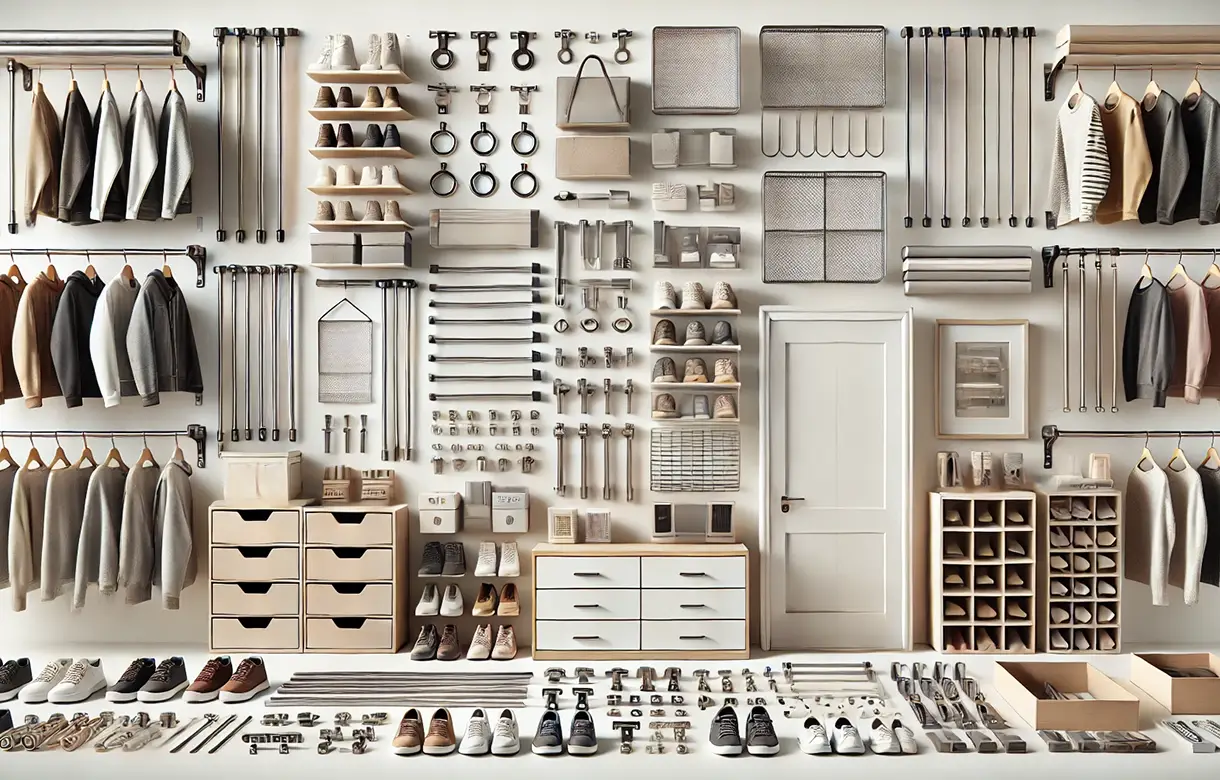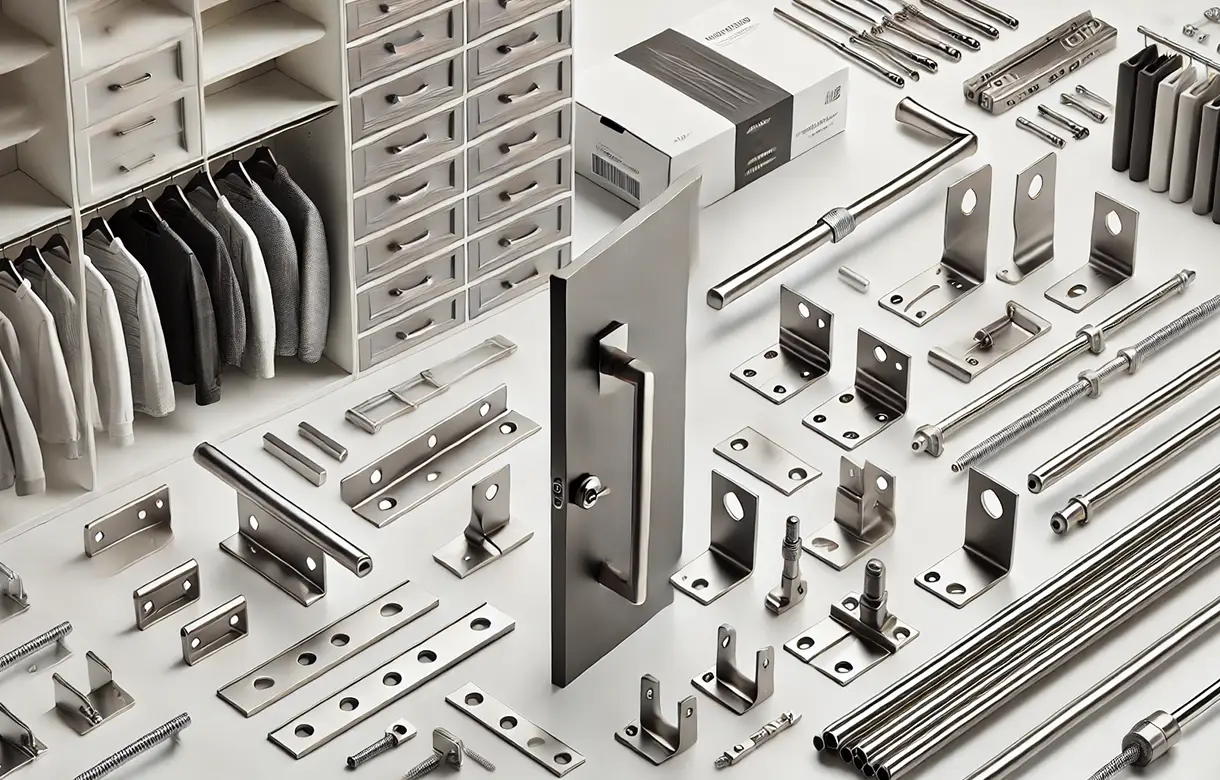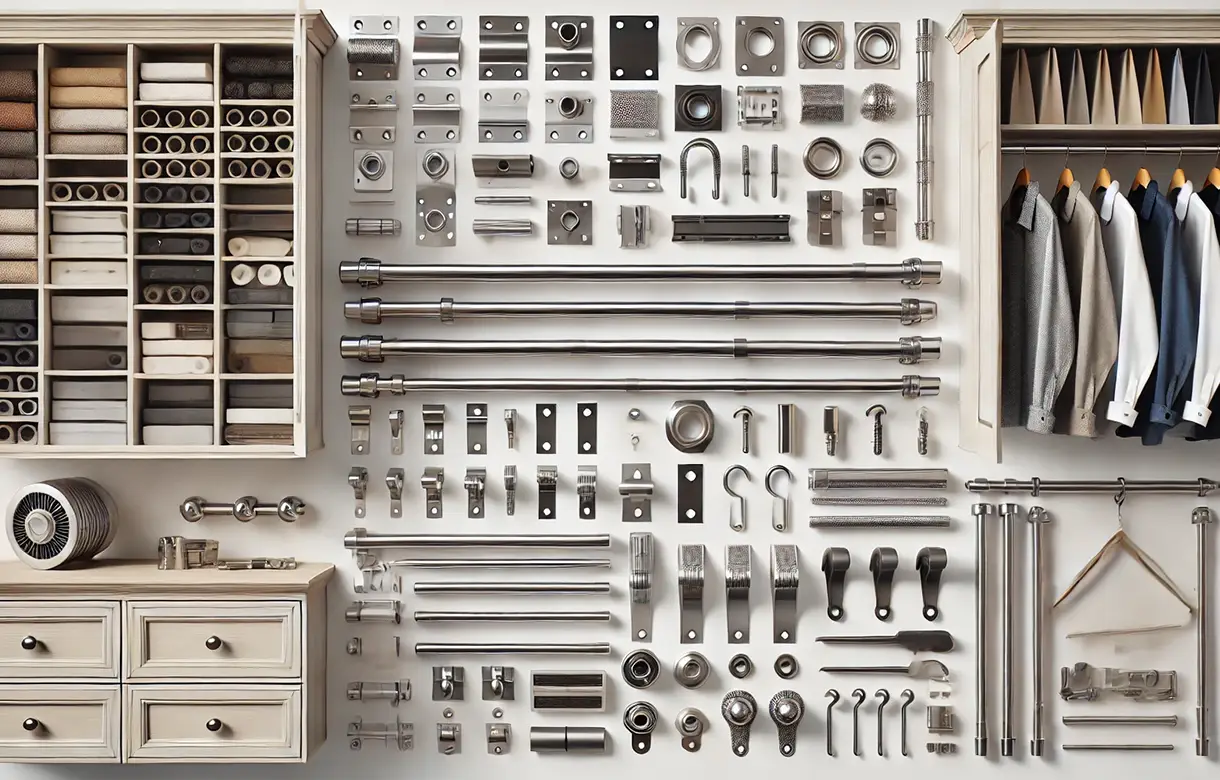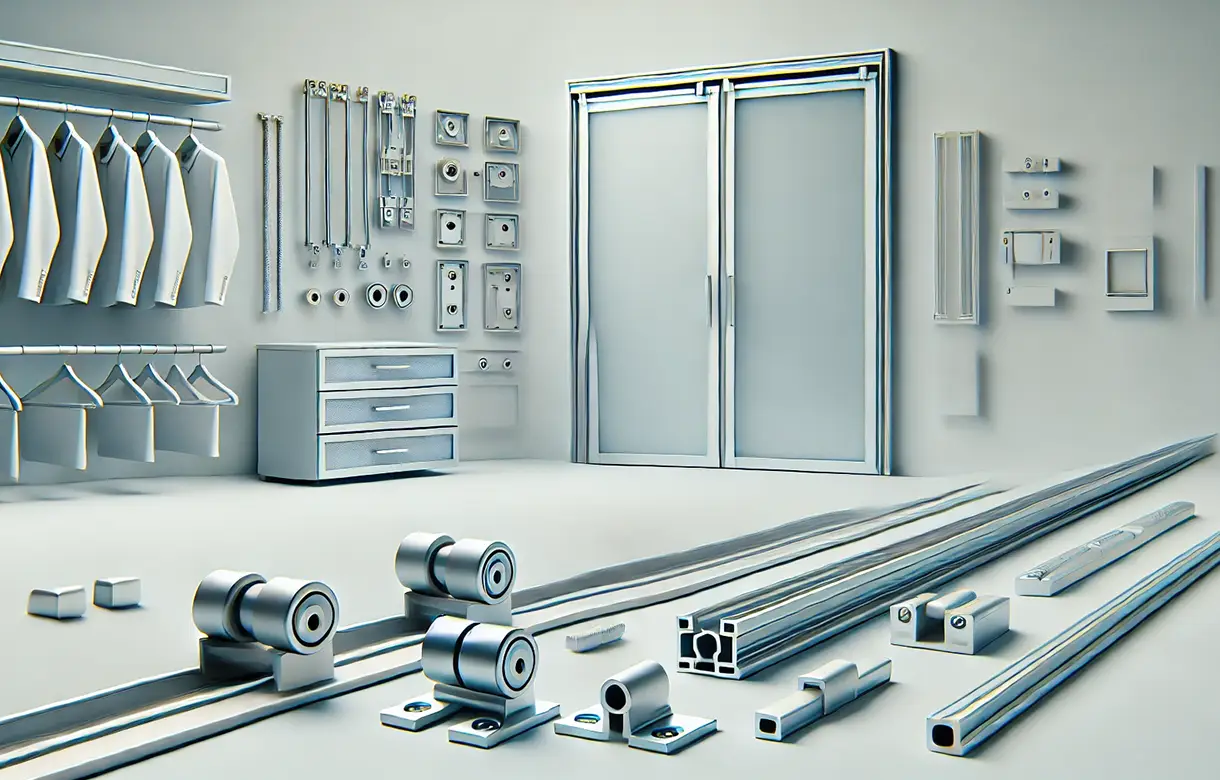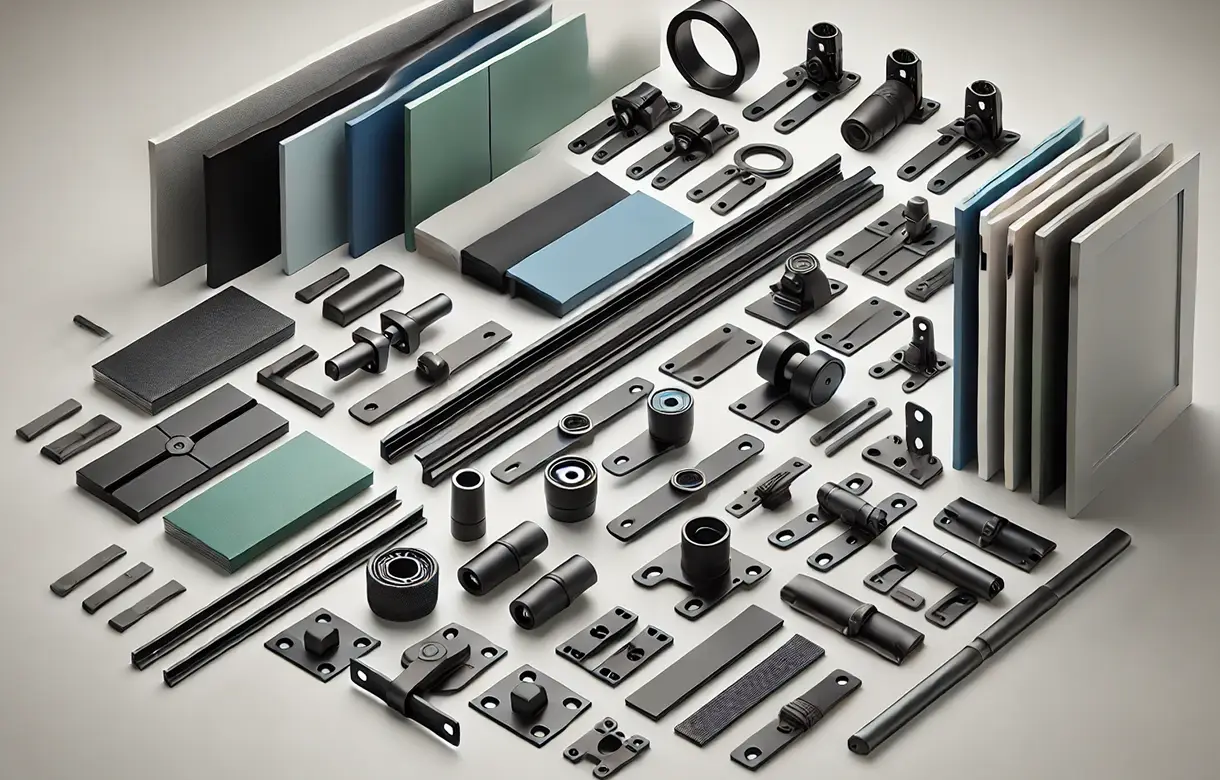
Nobody chooses a closet because of its hinges. But the hinges, the runners and the rods are what you touch every morning, and they are the difference between a closet that works and one you have quietly stopped using properly. A drawer that only opens three quarters of the way has a dead zone at the back that never gets emptied. A rod set above comfortable reach holds clothes you have not worn in two years. A door that bangs is a door somebody eventually stops closing.
Closet hardware and accessories are where a storage system either earns its cost or quietly fails to. They are also the part of a quote that customers cannot see in a showroom, which is exactly why it is the part most often economised on. My Inspired Space fits soft-close hinges, full-extension drawer runners, pull-down and valet rods, hooks, pulls, wardrobe organizers and integrated closet lighting, into our own systems and, subject to a compatibility check, into storage built by somebody else.
We work across South Surrey and the Semiahmoo Peninsula, from the builder-standard closets in the newer homes of Grandview Heights and Morgan Heights through to the decades-old fittings in Ocean Park, Sunnyside and Crescent Beach. A great deal of what we do here is not a new closet at all. It is making an existing one behave the way it should have from the start.
Components divide into four groups by what they actually do. Understanding which group a problem belongs to is most of the work, because the wrong category of fix is why so many closets feel no better after money has been spent on them.
These are the components that fail, and they are the ones that decide how a closet feels in use. Soft-close concealed hinges stop doors banging and stop them drifting open. Full-extension runners bring the entire drawer clear of the cabinet, so the back of it is reachable rather than being a place things go to be forgotten. Standard three-quarter-extension runners stop short, which means roughly a quarter of every drawer you own is storage you are paying for and not using.
Both are frequently retrofittable. Many concealed hinges made in recent decades share a standard cup bore and similar mounting plates, which often allows an upgrade without new drilling. Drawer runners depend more on the condition and dimensions of the drawer boxes than on their age. Either way the existing cabinetry is checked first, because the compatibility question is about clearances and panel condition rather than about how old the closet is.
Closet rods do more than hold weight. A pull-down rod uses a spring-assisted mechanism to bring a high hanging rail down to around chest height, which is what makes an upper tier genuinely usable rather than nominally available. In a closet with real height above the main rail, that single component often unlocks more capacity than any amount of reorganising below it.
A valet rod is the other one worth understanding properly. It is a short rail that pulls out for temporary hanging — an outfit for tomorrow, a garment bag, the things that come off a hanger during packing — and retracts flat when it is not in use. It costs very little space and it is consistently among the accessories people say they use daily, which is not true of everything in this category.
This is the group with the widest spread between what is genuinely useful and what gets installed and then ignored. Slide-out belt and tie racks bring items forward instead of leaving them buried against the back panel. Felt-lined jewellery inserts stop small things migrating. Drawer dividers keep folded clothing from collapsing into one pile. Closet shelving accessories such as shelf dividers do a quiet job of stopping stacks toppling into each other.
Pull-out closet baskets sit in the same family and are worth a specific conversation rather than a default recommendation, because whether a basket beats a plain shelf depends entirely on what is going in it and how often. Which pull-out and basket components are available for your project is confirmed at the design appointment against the section width, the panel thickness and the clearance the mechanism needs.
A closet you cannot see into is a closet where the back half is decoration. Low-profile LED strip fitted under shelves and along hanging sections changes that, and it can run in aluminium channels with diffusers so the contents are lit without the strip itself being visible. Switching is usually by door contact or motion sensor, so it behaves without anyone having to think about it.
The one thing to settle early is power. Where a new receptacle is needed for the driver, that portion is licensed electrical work and it sits outside the cabinetry scope, planned before fabrication rather than after, because a wiring route cannot be chased into a finished panel on site. The driver is also positioned so it stays accessible for servicing rather than being sealed in.
The honest filter is whether the component removes a daily irritation or merely adds a feature. Anything that makes an existing space reachable — full-extension runners, a pull-down rod, lighting — tends to change behaviour immediately, because it converts storage you own but cannot use into storage you actually use. Anything that subdivides space you are already using well tends to be pleasant rather than transformative.
The second filter is whether you already have the problem it solves. Custom closet accessories bought because they looked good in a showroom are the ones that end up empty. A tie rack in a household that owns four ties is a tie rack that holds dust. We would rather specify fewer components that get used than a full catalogue that looks impressive in a rendering.
The visible parts of a closet are judged once, when it is installed. The moving parts are judged every single day, and they are what people actually describe when they say a closet feels cheap or feels solid. A drawer that glides and stops itself, a door that closes with a soft click rather than a bang, a rod that does not flex under a row of winter coats — none of those are features anybody lists, and all of them are what the experience of the closet consists of.
Hardware is also where cost is most often quietly removed from a competing quote, precisely because it is the part a customer does not inspect in a showroom. Two quotes for what looks like the same South Surrey closet can differ substantially on runner type alone, and the difference does not show up until the drawers have been loaded and used for a year. Asking any quote to state the runner type and the hinge type is the single most useful comparison question available.
There is a capacity argument as well as a comfort one. Three-quarter-extension runners leave a portion of every drawer effectively inaccessible. A rail set above comfortable reach makes an entire tier notional. A dark closet has a back half nobody uses. Fixing any of those adds usable capacity without adding a centimetre of cabinetry, which is generally the cheapest storage anyone can buy.
Finally, hardware is what ages. Panels and shelves rarely fail in a closet; hinges sag, runners bind, and cheap pulls work loose. Specifying for the load each component actually carries rather than to a standard rating is what determines whether a system is still behaving properly in a decade.
Start with the things that are annoying you rather than with a product list. Drawers that stick, doors that bang, a shelf you cannot see the back of, a rail you have to reach for, a pile that collapses every time you take something from it. Each of those maps to a specific component, and working from the irritation to the fix produces a much better list than working from a catalogue to a wish.
Then spend on reach before you spend on subdivision. Full-extension runners, a pull-down rod and lighting all convert storage you already own into storage you can actually use, and they change behaviour within a week. Dividers, inserts and racks make already-usable space tidier, which is worth having but is a second-order gain. When a budget is limited, reach wins.
Then decide what has to be specified now and what can wait. Anything that affects the structure or the wiring — lighting, a pull-down mechanism that needs a particular section height, a drawer bank that needs a specific clearance — belongs in the design rather than in a later phase, because retrofitting it means dismantling. Small organizers and inserts that mount to panels and gables are genuinely easy to add later, so there is no cost to deferring them.
Finally, buy against what you own rather than what you might own. The most reliable way to waste money in this category is to specify a full set of specialist organizers before living with the closet, and the most reliable way to get it right is to fit the structural items at the start and then add the small components over the first few months once you have seen how the space is actually used.
The most common by some distance is a closet full of accessories that are empty. Specialist organizers chosen at design stage for a wardrobe that did not exist yet, or bought because a rendering looked impressive, and eighteen months later the tie rack, the shoe fence and half the dividers are holding nothing. Nothing is wrong with any of them. They were simply specified against an imagined household rather than the real one.
The second is upgrading the wrong layer. People replace pulls and add inserts in a closet whose actual problem is that the rail is at a single height and the drawers do not open fully. The visible components get the attention and the functional ones do not, so the closet looks improved and behaves the same. The order should be the reverse.
The third is retrofitting without checking. Not every hinge pattern accepts a modern soft-close replacement, not every drawer box suits an undermount runner, and not every panel is thick enough to carry a pull-out mechanism at the width you want. These are all easy checks and all expensive assumptions, which is why compatibility is established before anything is ordered rather than on installation day.
The fourth is lighting added as an afterthought. Running wiring into a closet that is already built means either surface-mounted trunking or taking panels off, and the result is rarely as clean as it would have been. Where lighting is even a possibility, it belongs in the design conversation, and any new circuit is licensed work with its scope set out in writing before the build.
The fifth is upgrading hardware in a system that is not worth saving. If the panels are swollen, delaminating or structurally tired, new hinges and runners are money spent on a carcass that is going to need replacing anyway. We will say so. The point of a hardware assessment is to work out which of the two answers is right, not to sell components either way.
It starts with the problem rather than the product. What sticks, what bangs, what sags, what is too dark, what cannot be reached. From there we check the things that determine what is possible: door thickness and existing hinge pattern, drawer box dimensions and condition, panel thickness and section widths, available clearances, and what the drawers and rods are actually being asked to carry. Photographs are often enough to start the conversation before an in-home visit.
Components are then chosen against those measurements and loads rather than picked from a catalogue. That is the whole distinction between a hardware upgrade that lasts and one that repeats the original problem in a different form. Where the assessment shows that the underlying system cannot meet the household's needs whatever hardware goes into it, we will say that instead and discuss a rebuild.
Components are confirmed and ordered against the recorded measurements, and any work that sits outside the cabinetry scope — most commonly a new circuit for closet lighting — is identified and set out in writing before the schedule is fixed. The timeline on a hardware project is usually governed by component availability rather than by the work itself.
Installation is precise rather than heavy work. Hinges are adjusted so doors sit on a consistent line and close properly, runners are set so drawers run square and do not bind, rods and pull-out mechanisms are fixed into panel or structure appropriate to the load they carry, and everything is tested loaded rather than empty. The closet needs to be emptied of whatever is in the sections being worked on.
Selection follows load and clearance, in that order. A drawer carrying folded clothing and a drawer carrying tools are different specifications even when they are the same size, and a runner chosen for the box rather than for the contents is the one that binds within a year. The same logic applies to hanging: a rod fails at its supports and its span rather than in the middle of the tube, so the support spacing matters as much as the rod itself.
Clearance is the constraint that stops otherwise sensible components. Pull-out mechanisms need running room beside and behind them, a pull-down rod needs a specific height above the rail it replaces to work through its arc, and an undermount runner needs a drawer box built to suit it. All three are simple measurements and all three are why compatibility is checked before ordering rather than after.
Fitting into a system built by somebody else is routine, subject to that same compatibility check. Wardrobe accessories that mount to panels and gables are among the easier retrofits, since they depend on panel thickness and section width rather than on who made the closet. Hinges and runners need a little more checking, because door thickness, the existing hinge pattern and drawer box condition all have to line up.
Component ratings, load capacities, finish options and warranty terms are confirmed directly for the components quoted on your project rather than published here as general figures, and the available accessory range is confirmed at the design appointment.
A large share of the closet hardware work on the peninsula falls into two quite different situations. The first is the newer housing in Grandview Heights, Morgan Heights and Rosemary Heights, where the closets are generously sized and the fittings inside them are whatever cost the builder least: a single rail at one height, one shelf above it, and a wire system in the secondary bedrooms. Nothing about those closets is worn out. They were simply never fitted out, and the upgrade required is usually about reach and division rather than repair.
The second is the established housing in Ocean Park, Sunnyside, Crescent Beach and the older streets of Elgin Chantrell, where the cabinetry is frequently sound but the moving parts have done decades of work. Doors that no longer sit level, runners that bind, rails that have taken a permanent set. There the question is genuinely whether hardware is the answer, and the assessment exists to establish that honestly rather than to assume it.
There is a third pattern worth naming, which is closets fitted by a previous owner or by another company. We install closet organizer accessories and hardware into systems we did not build, subject to the compatibility check, and on a peninsula with this much property turnover that is a common request. What decides it is panel thickness, section width, hinge pattern and drawer box condition, none of which depend on whose name was on the original invoice.
Lighting is worth raising specifically here. A great many closets in the older, mature-treed parts of South Surrey are genuinely dark, with north-facing bedrooms under substantial canopy, and integrated LED makes more difference in those rooms than it does in a bright new build. It is also the component that most often has to be planned rather than added, which is why it comes up at design rather than later.
We work as a closet hardware supplier and installer serving South Surrey and the surrounding area from our own Pitt Meadows shop, covering Grandview Heights, Morgan Heights, Morgan Creek, Rosemary Heights, Sunnyside, Ocean Park, Crescent Beach, Elgin Chantrell, Hazelmere and Pacific Douglas, along with neighbouring White Rock and the rest of the Lower Mainland.