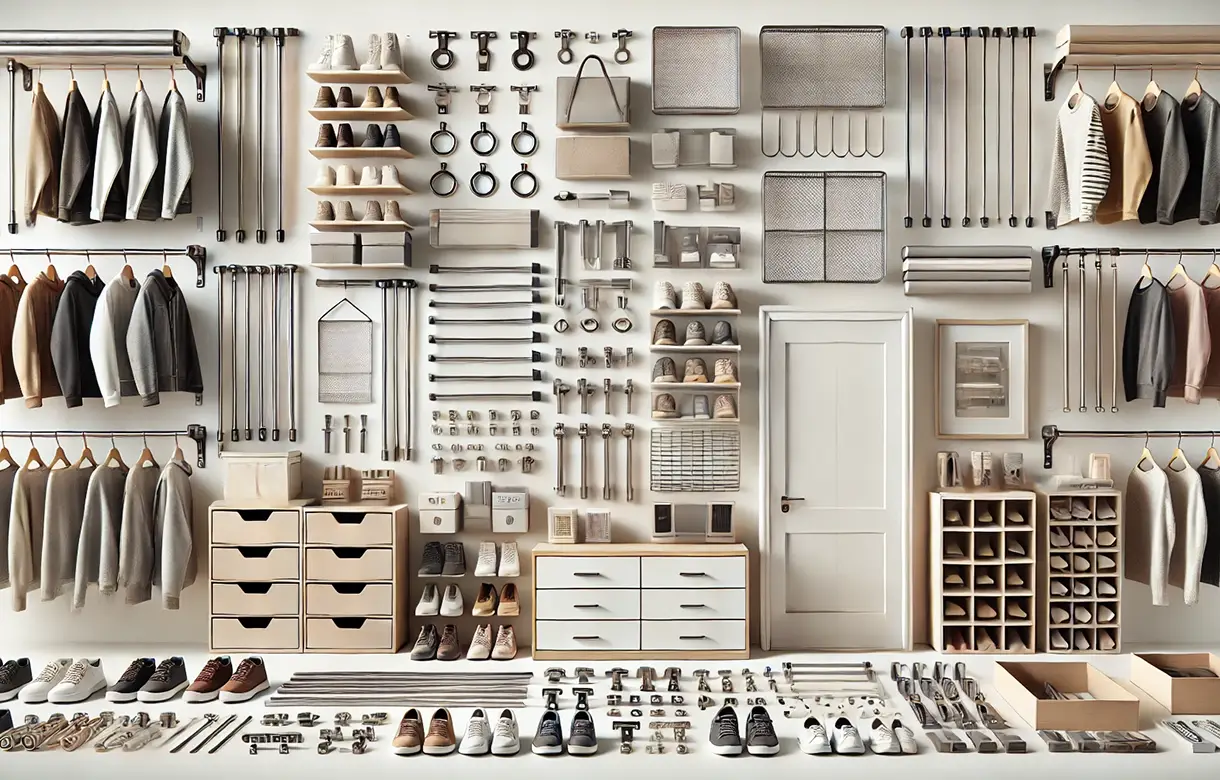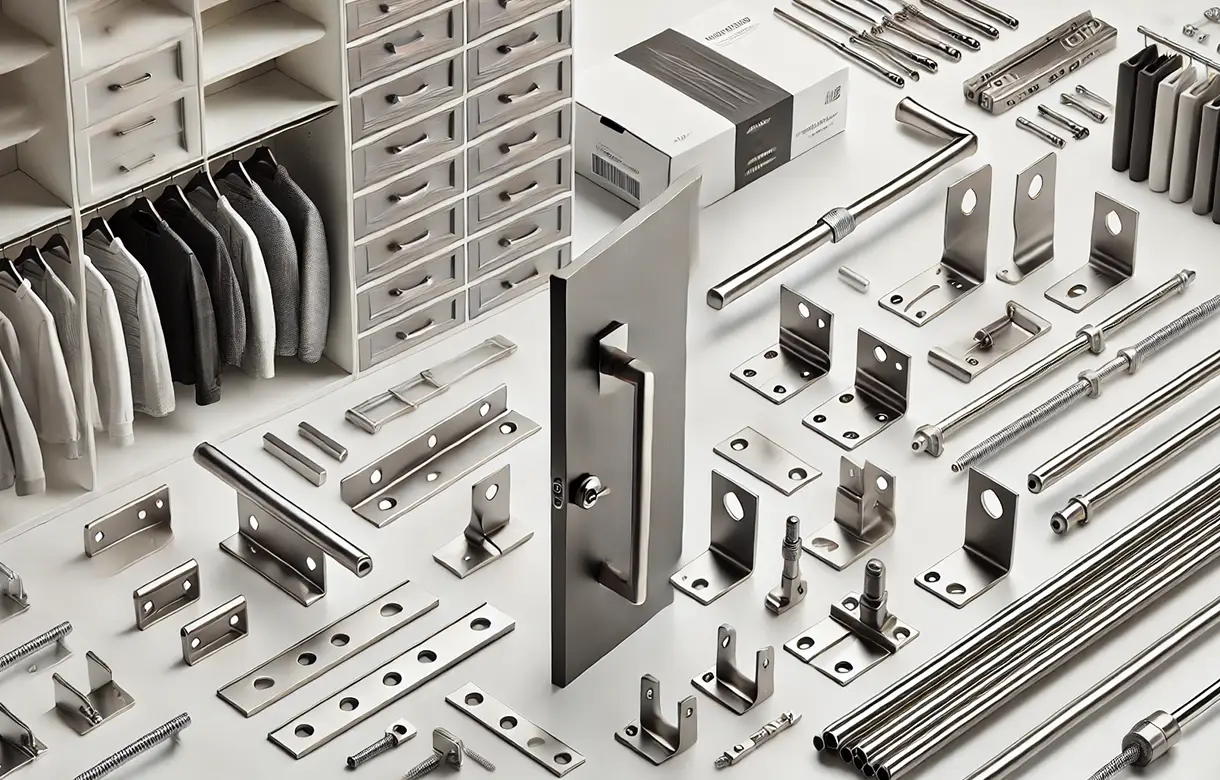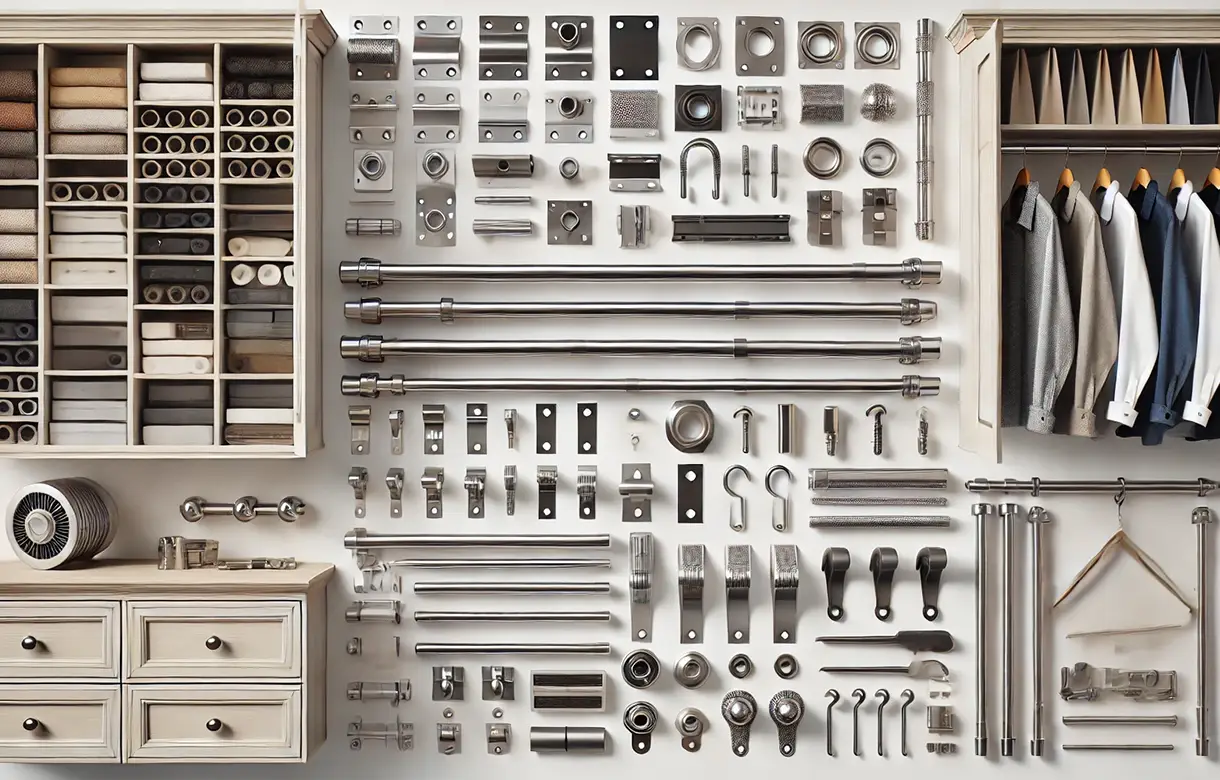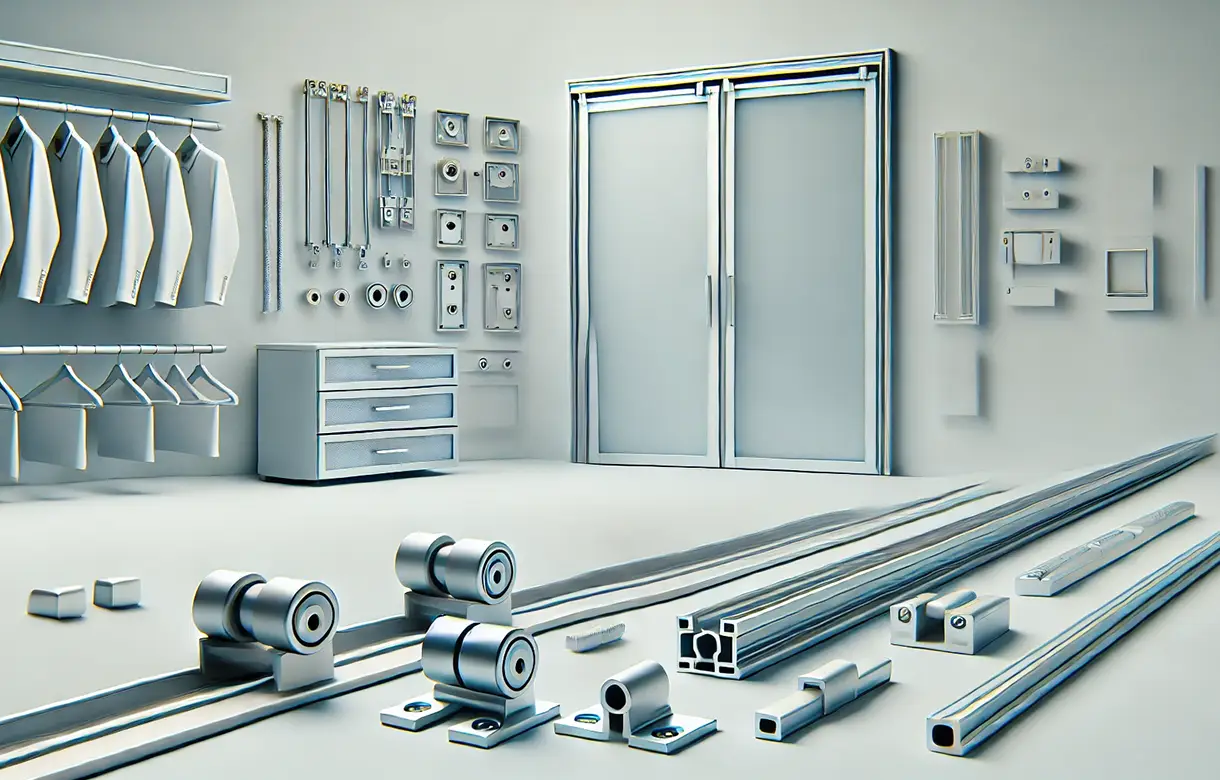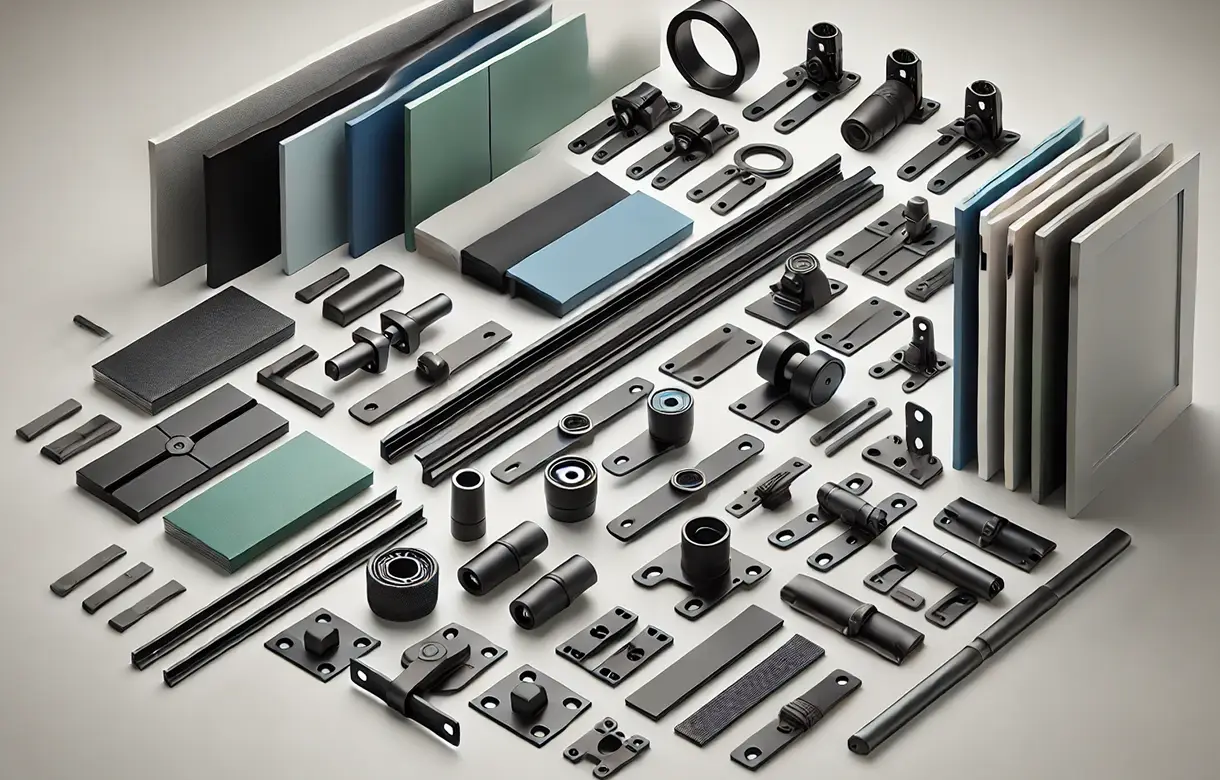
Everything else in a closet sits still. The carcase does not move, the shelves do not move, the panels do not move. The hardware is the only part with anything to do, and it does it thousands of times: a drawer opened and shut twice a day for a decade, a hinge swung every morning, a rod taking a full load along its whole length without a break, a pull-out running in and out for as long as the closet exists. That is the whole reason hardware is where these projects quietly succeed or fail.
It is also why choosing closet hardware and accessories in White Rock from photographs is the wrong method. A handle, a slide and a hinge all look much the same in a rendering and behave nothing alike after two winters of daily use. The useful question about any piece of closet hardware in White Rock is not how it looks on the day of installation but what it is rated to do, how many cycles it was built for, and what happens to it when the opening it is fitted into is not quite square — which, in this housing stock, is often.
My Inspired Space specifies, supplies and fits closet hardware and accessories in White Rock as part of the systems we design and build, in the converted cottages and postwar houses near the beach, the hillside homes above Marine Drive, the newer builds uphill towards Bayridge and the apartments around Johnston Road and Five Corners. If you are looking for a closet hardware supplier in White Rock rather than a fitted system, whether individual items can be supplied on their own is confirmed on enquiry rather than assumed here.
Four groups, and they are worth separating because only two of them are structural and only two of them are optional.
A hanging rod is the hardest-working piece of hardware in any closet, and the one most often treated as an afterthought. It carries a real, constant, distributed load along its entire length, it never gets a rest, and the failure mode is not dramatic — it is a slow bow in the middle that nobody notices until the garments in the centre are touching the shelf below. Closet rods in White Rock closets fail on span far more often than on strength: the same rod that is entirely adequate over a short run is under-supported over a long one.
That makes support spacing a specification decision rather than an installation detail, and it is the reason a long run gets an intermediate support even where the rod could theoretically reach. Rod and support load ratings and their maximum spans are confirmed in writing for the configuration you are quoted, because the answer depends on the rod, the support type and what is being hung on it.
Slides and hinges are the components with a genuine service life, and they are where the difference between specifications is felt daily rather than seen. What matters is the duty they were built for and whether they are rated for the weight of what is actually going in the drawer — a drawer of folded knitwear and a drawer of shoes are not the same load, and a slide chosen for the lighter one will feel wrong within months of holding the heavier.
Full-extension behaviour is worth understanding in the same practical terms. A drawer that only opens part way puts its back third permanently out of reach, which in a closet means the clothing at the back stops being worn. Whether a given slide offers full extension, what it is rated to carry, whether a soft-close or self-closing mechanism is included, and what warranty applies are all confirmed in writing for the configuration you are quoted rather than stated generally here.
This group is where closets get genuinely more usable rather than merely better equipped. A pull-out brings the back of a deep section to the front, which is the only real answer to the hidden-second-row problem that defeats deep shelving. Pull-out closet baskets in White Rock closets do the same job for anything that should be visible and ventilated rather than stacked, and a built-in hamper removes the one object that otherwise sits on the closet floor permanently.
Two honest notes. Pull-outs cost more per cubic foot of storage than a fixed shelf, so they are worth specifying where reach is the actual problem rather than everywhere. And whether baskets, bins and hampers are supplied as part of a system, or whether they are items you source separately to fit the openings we build, is confirmed on enquiry — it is a fair question to ask before you assume either.
Closet organizer accessories in White Rock are mostly small, cheap and disproportionately useful: a valet rod to hang tomorrow's clothes or to hold garments while a drawer is open, hooks inside a door where nobody sees them, a tie or belt rack that recovers a few inches of otherwise dead width, dividers that stop a deep drawer becoming one compartment, and a mirror positioned where the light actually reaches it.
The selection principle for all of them is the same and it is simple: specify what will be used daily and decline the rest. Closet shelving accessories in White Rock projects are where budgets get quietly spent on fittings that photograph well and get used twice. A designer who talks you out of half the accessory list is doing the job properly.
The test is frequency of use, not cleverness. Anything touched daily justifies the better specification: the slides on the drawers you open every morning, the rod carrying the bulk of the hanging, the hamper, the valet rod if you actually lay clothes out the night before. Anything touched seasonally does not, and a fixed shelf frequently beats a mechanism for it.
Room size shifts the answer more than budget does. In a small closet — and in the older houses and apartments here there are a great many — accessories are doing the work that extra square footage would otherwise do, so pull-outs, door-mounted fittings and dividers earn their cost. In a generous walk-in, the same items are conveniences rather than necessities. Custom closet accessories in White Rock are best chosen against the room you have rather than the one in the brochure.
Consider what a homeowner actually notices about a finished closet a year later. Not the joinery, which is static and fine. They notice that a drawer has started to drag, or that it never opened fully in the first place, or that the rod has a bow in it, or that a door no longer closes flush. Every one of those is hardware, and every one of them was decided at specification rather than at installation.
That asymmetry is worth taking seriously, because hardware is a small fraction of the cost of a closet and a large fraction of the experience of using one. Cutting the hardware specification to bring a quote down is the single most effective way to make an otherwise good closet feel cheap, and it is also invisible on the quote unless somebody itemises it. Wardrobe accessories in White Rock are frequently where two quotes for apparently identical work actually differ.
The corollary is that hardware is worth asking about directly. What the slides are rated to carry, whether they are full extension, what the rod support spacing is over a long run, and what warranty covers the moving parts. Those four answers tell you more about a quote than the drawing does.
Start from the morning rather than from a catalogue. Which drawer gets opened first, what you reach for while still half awake, whether you lay clothes out the night before, where the laundry currently lands, and what you cannot presently see without moving something else. Each of those points to a specific fitting, and the ones it does not point to are the ones to leave out.
Then weigh what is going in. This is the step that gets skipped and it is the one that decides slide specification: shoes, bags and anything dense are a substantially different load from folded clothing, and a drawer intended for them needs specifying for them from the start rather than being discovered to be inadequate afterwards. Tell your designer what goes in each drawer and the hardware follows from it.
Last, consider what the room does to metal. In a home a few streets from the water, with windows open to salt-laden air for much of the year, finishes and mechanisms live in a slightly harsher environment than they would inland — not the extreme of an unheated garage, but not a dry inland bedroom either. What a given finish and mechanism is specified for in that setting is confirmed in writing rather than generalised here, and it is a reasonable thing to ask about.
The most common is a drawer that does not open fully. It is not a fault so much as a choice made at specification, and its effect is that the back third of every drawer stops being used, which quietly removes a meaningful share of the storage that was paid for. The second is slides under-specified for what went in: the drawer that holds the shoes is almost always the one that starts to drag first.
Third is rod span. A long run of hanging with supports only at the ends will bow in the middle, and once it has taken a set it does not recover. This is the most frequent single hardware complaint we are called about, and it is entirely a matter of support spacing decided at design stage.
The fourth is specific to the housing stock here rather than to the products. In the older converted houses on the slope, openings are frequently out of square and floors fall away, which puts uneven load on hinges and sliding gear that were fitted as though the opening were true. Doors that will not sit flush and sliding fronts that catch at one end are usually not faulty hardware — they are correctly working hardware fitted into a frame that needed scribing first.
A designer goes through the closet with you and through the routine that uses it, establishing what is opened daily, what goes in which drawer, what currently cannot be seen or reached, and where the laundry actually lands. The opening itself is checked for square, since that determines how doors and sliding gear will behave. The consultation is free and carries no obligation.
The accessory and hardware schedule is set out against that use: which slides and what they are rated for, rod runs and their support spacing, which pull-outs and where, and which small fittings are included. Anything optional is identified as optional rather than bundled, and anything depending on a confirmed rating or a supply question is stated rather than assumed into it.
Hardware and accessories are specified and supplied as part of the system we fabricate in our own shop in Pitt Meadows. Ratings, finishes, mechanism types and warranty terms are confirmed in writing for the configuration you are quoted, and nothing is substituted after approval without telling you first.
Our own installers fit and then adjust everything before they leave: hinges set so doors sit flush in the opening as it actually is, drawers levelled and running true, rods supported at the planned spacing, pull-outs and baskets set in place and tested. The adjustment is the part that distinguishes a fitted installation from an assembled one, particularly in a house where nothing is square.
Specification runs from the load and the cycles backwards. What goes in the drawer sets the slide; how long the hanging run is sets the rod support spacing; how often a door is opened sets the hinge specification; whether a section is deep enough to hide its own contents decides whether it needs a pull-out at all. Working the other way round — choosing hardware first and then deciding what to put in it — is how drawers end up dragging.
Fitting is where the housing stock intervenes. In a house where the opening is out of square and the floor falls away, hardware fitted to nominal dimensions will work badly even when it is entirely adequate, because a hinge or a slide can only compensate for so much. So the carcase is scribed to the room first and the hardware is set and adjusted to the carcase afterwards, in that order.
Slide load ratings and extension type, hinge specifications, rod and support load ratings and maximum spans, soft-close or self-closing mechanisms, finish specification, and warranty terms on the moving parts are all confirmed directly in writing for the configuration you are quoted. They are not published here as general figures because they differ by product, by span and by intended contents. Whether baskets, bins and hampers are supplied with a system, and whether hardware can be supplied without one, are both confirmed on enquiry. Where a project involves lighting inside a closet or moving a switch, that is electrical work with its own scope, identified before the build.
Two things about the housing here make hardware matter more than it would elsewhere. The first is that so many of the bedrooms are small. In the converted cottages and postwar houses near the beach, and in the apartments around Johnston Road and Five Corners, the closets are modest and there is no prospect of making them bigger, so the fittings are doing the work that floor area would otherwise do. A pull-out that brings the back of a section forward, or a door-mounted fitting that uses a surface nobody counted, is worth more in those rooms than any finish upgrade.
The second is that the older houses on the slope are rarely square. Extended and altered in stages, with floors that fall towards an outside wall, they produce openings that are out of true in both directions. Hinges and sliding gear fitted as though the opening were square will bind, catch or sit proud, and the remedy is almost always scribing the carcase first rather than adjusting the hardware harder. It is the single most common reason we are asked to look at hardware that turns out to be working correctly.
Apartments add a constraint that makes this page unusually relevant. Where a strata restricts what may be altered, fixed into or removed, accessory-level changes are frequently the only improvement available: better slides, a pull-out inside the existing opening, door-mounted fittings, a hamper, dividers. That is a genuinely useful conversation to have, and it starts with what the building permits rather than with what the closet could ideally become.
The newer houses uphill towards Bayridge and through the Hillside streets usually have square openings, adequate closets and a builder-standard interior, which means hardware is where the upgrade actually lives. There the work is specification rather than problem-solving: full-extension slides rated for what is going in them, correct rod support over longer runs, and the handful of daily-use fittings that a builder's fit-out never includes.
The coastal setting is worth one honest note. A bedroom closet is not a garage, but a home a few streets from the water with windows open to salt-laden air for much of the year is a slightly harsher environment for finishes and mechanisms than a dry inland house. What a given finish is specified for in that setting is confirmed for your project rather than claimed generally, and it is a fair question to put to anybody quoting.
We specify, supply and fit hardware and accessories throughout White Rock and the Semiahmoo Peninsula from our own shop in Pitt Meadows, covering East Beach, West Beach, Marine Drive, Five Corners, Hillside, Bayridge, Centennial and the streets above Johnston Road, along with neighbouring South Surrey, Ocean Park, Crescent Beach and the rest of the Lower Mainland. If you are comparing quotes, ask each company what the drawer slides are rated to carry and how far apart the rod supports will be. Two quotes that look identical on the drawing frequently differ most in exactly those two answers.